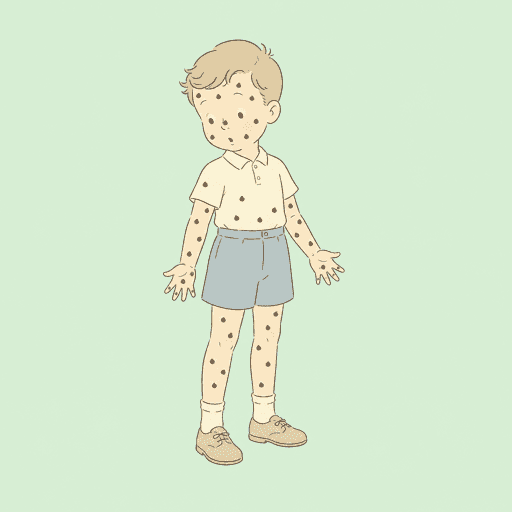
Chocolate Fever
A modern alternative to SparkNotes and CliffsNotes, SuperSummary offers high-quality Study Guides with detailed chapter summaries and analysis of major themes, characters, and more.
Summaries & Analyses
Quizzes
NEWReading Tools
Background
Content Warning: This section of the guide includes discussion of racism and illness.
Authorial Context: Robert Kimmel Smith’s Rheumatic Fever
The fantastical premise of a boy breaking out in chocolate spots has its roots in a serious illness experienced by the author. When Robert Kimmel Smith was eight years old, he was bedridden for three months with rheumatic fever. This inflammatory disease, a complication of untreated streptococcal infections, was a significant public-health concern for children in the 1930s, when Smith was ill. The illness forced him into a long period of isolation, during which he became a voracious reader and began inventing his own stories to pass the time. This formative experience shaped Chocolate Fever. Henry’s sudden ailment, which causes him to be whisked away from school to a hospital, mirrors the abrupt, isolating nature of a serious childhood illness. Like the author, Henry finds himself suddenly separated from his normal life and treated as a medical curiosity. Smith’s personal history of confinement and his turn to imagination as an escape route are channeled into Henry’s own frightening journey. The protagonist’s flight from the hospital is a fantastical escape from the powerlessness and fear that a sudden, severe illness can impose upon a child. In Chocolate Fever, Smith transforms his real-life ordeal into a whimsical adventure.
Literary Context: The Midcentury Candy Cautionary Tale
Chocolate Fever, published in 1972, belongs to a subgenre of midcentury children’s literature, the candy-fueled cautionary tale. These stories often use magical or surreal consequences to warn against childhood vices like greed and overindulgence. A prominent example is Patrick Skene Catling’s The Chocolate Touch (1952), in which a boy named John Midas is cursed so that everything he puts in his mouth turns into chocolate. Another is Roald Dahl’s Charlie and the Chocolate Factory (1964), in which indulgent children meet bizarre fates tailored to their specific flaws. The overindulgent Augustus Gloop is swept away in a chocolate river, and the obsessive gum-chewer Violet Beauregarde turns into a giant blueberry. In these narratives, the fantastical punishments are physical manifestations of the children’s excessive behaviors. Henry’s ailment fits within this tradition. His body literally erupts in chocolate spots because of his insistence on eating chocolate for every meal. His comical yet alarming transformation serves the same moral function as the fates of Augustus Gloop or John Midas in teaching a lesson about moderation. This subgenre responds to its historical context. Before the midcentury, chocolate and other candies had generally been luxury, artisan items, and during World War II, access to such items was furthered limited due to food shortages and rationing, particularly on sugar. After the war, the industrialization of chocolate production, mass marketing, a booming economy, and fewer limits on food access led to increased chocolate consumption in both the United Kingdom and the United States. The story frames overindulgence as a condition that can overwhelm a person, a common theme in an era when anxieties about overconsumption were culturally prevalent.
Cultural Context: The “Black Is Beautiful” Movement
In the 1960s and 1970s, the “Black Is Beautiful” movement, an extension of the Black Power movement, sought to counteract centuries of racist messaging that defined beauty by Eurocentric standards. Activists and artists promoted pride in natural hair, dark skin tones, and other physical features of African descent as a radical act of self-affirmation and psychological liberation. The movement was popularized through figures like photographer Kwame Brathwaite, whose fashion shows celebrated Black features. In Chocolate Fever, Mac quotes the movement’s slogan when he says, “You know, black is beautiful” (63). He uses this philosophy to comfort Henry by comparing the stares that he receives for being Black to the stares that Henry gets for his chocolate spots and by saying that they should both be proud to be “unique.”
While well intentioned, this comparison equates systemic racism with a humorous and fantastical dilemma. It flattens the systemic, historical reality of racism into an analogy for a temporary, self-inflicted, and magically curable illness. Understanding the context of the “Black Is Beautiful” movement allows readers to recognize the book’s attempt at a progressive message while also critically examining its flawed execution.

Get in-depth, chapter-by-chapter summaries and analysis from our literary experts.
- Grasp challenging concepts with clear, comprehensive explanations
- Revisit key plot points and ideas without rereading the book
- Share impressive insights in classes and book clubs