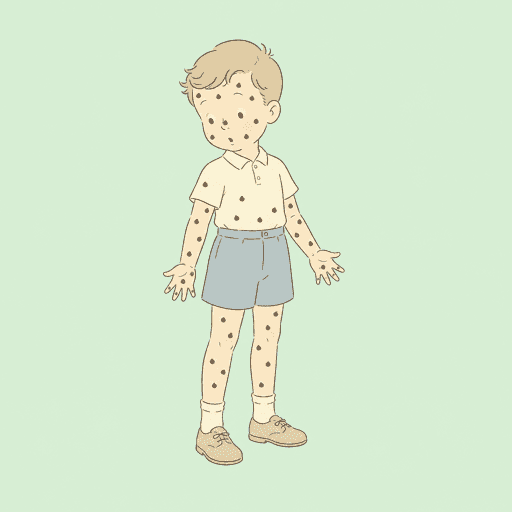
Chocolate Fever
A modern alternative to SparkNotes and CliffsNotes, SuperSummary offers high-quality Study Guides with detailed chapter summaries and analysis of major themes, characters, and more.
Summaries & Analyses
Quizzes
NEWReading Tools
Chapters 10-12Chapter Summaries & Analyses
Chapter 10 Summary: “Taking a Licking”
Lefty drives the truck to a secluded cabin in the country. Inside, Louie orders Mac and Henry to a corner and warns them not to cause trouble. As the thieves argue over what to do with their stolen cargo, Mac and Henry hear distant barking. The sound grows louder, and when Louie opens the door to investigate, a German shepherd knocks him to the ground.
A whole pack of dogs follows, rushing into the cabin and swarming Henry, licking him excitedly. In the ensuing chaos, Mac disarms the stunned Lefty and also picks up the pistol that Louie dropped. Soon, the dogs’ owners arrive, followed by the local police. The officers sort out the situation and arrest Lefty and Louie. With the ordeal over, Mac and Henry prepare to finally deliver the candy.
Chapter 11 Summary: “At ‘Sugar’ Cane’s”
Mac and Henry arrive at a large warehouse owned by a friendly man named Alfred “Sugar” Cane. After Henry recounts his adventure and explains his chocolate-induced spots, Mr. Cane reveals that he also suffered from “Chocolate Fever” as a boy. Mr. Cane explains that the cure has two parts. The first is learning the difficult lesson of moderation: “Although life is grand, and pleasure is everywhere, we can’t have everything we want every time we want it” (84). Henry understands, admitting that he has had too much of a good thing.
The second part of the cure involves a physical antidote. Mr. Cane gives Henry a small box of “[v]anilla pills,” explaining that vanilla is the opposite of chocolate. He explains that he decided to dedicate his life to sharing the joy of chocolate with the world. He assures Henry that the pills will make his spots disappear by the time he gets home as long as he has truly learned the lesson. Henry and Mac then leave to take Henry home.
Chapter 12 Summary: “The Lesson Learned”
Henry wakes up in his own bed on Sunday morning to find that his brown spots are completely gone. At a family breakfast, he learns that the candy company wants to give him an award, that Mac has invited their family for dinner, and that Dr. Fargo has requested a follow-up visit. When his mother serves him pancakes with his favorite chocolate syrup, Henry surprises everyone by asking for maple syrup instead. His father smiles, remarking that Henry is growing up. Henry then tries cinnamon on his pancakes and enjoys it so much that he begins to wonder if a person could get “Cinnamon Fever.”
Chapters 10-12 Analysis
In the novel’s final section, the chaotic climax of the hijacking solidifies the book’s fantastical elements and the author’s message of Compassion as an Antidote to Isolation. In a surreal twist, an “army of yelping, barking dogs” creates a “dog riot” that completely disarms the criminals (77). This event is a deus ex machina, a sudden and improbable intervention that saves the protagonists from a conventional showdown. Unlike the humans who have judged, studied, or bullied Henry for his appearance, the dogs respond with overwhelming affection, “licking him as if he were some sort of new dog yummy” (78). Their uncritical response provides a key example of compassion, as the animals’ simple, physical love diffuses a dangerous human conflict and renders the armed thieves powerless. The resolution demonstrates that Henry’s alienating condition can also be an unintended blessing.
The narrative structure juxtaposes two forms of excess to reinforce its central theme of The Cost of Overindulgence. While Henry’s journey is the primary focus, Lefty and Louie serve as his narrative foils. Their greed for valuable furs results in them comically acquiring a truckload of unwanted candy, a direct parallel to Henry contracting an unwanted illness from his own excess. The thieves’ frustration and subsequent capture by a pack of dogs represent a slapstick punishment for their greed. Lefty’s final complaint, “It’s getting so a guy can’t make a dishonest living anymore” (80), is played for laughs but emphasizes a key message: Misguided pursuits lead to failure. The book punishes both forms of obsessive desire—Henry’s for chocolate and the thieves’ for wealth—with chaotic, undesirable consequences. This parallel structure allows the story to explore the effects of overindulgence on both a personal, introspective level with Henry and a broader, more comical level with the criminals.
Following the rescue, Henry’s meeting with Alfred “Sugar” Cane provides the story’s explicit moral resolution, a common feature of midcentury candy cautionary tales. Mr. Cane, a kindly figure who looks “not a little like Santa Claus” (82), is a mentor archetype who reveals that he also suffered from “Chocolate Fever” as a child. This shared experience validates Henry’s ordeal and establishes Mr. Cane as a credible source for the story’s central lesson about The Cost of Overindulgence. He explains that the first part of the cure is learning the difficult truth that “[people] can’t have everything [they] want every time [they] want it” (84). This aphorism distills the book’s didactic purpose into a single line, fitting squarely within the literary tradition of moral instruction through fantasy. Mr. Cane’s own life story, in which he channeled his childhood obsession into a successful business that brings joy to others, offers a redemptive model for Henry to follow. He demonstrates that passions, when properly managed, can be productive rather than destructive, transforming a personal flaw into a source of purpose.
One of Mr. Cane’s most important functions as a mentor figure is his outlining of Moderation as a Path to Maturity, which facilitates the novel’s moral lesson and happy ending. The cure that Mr. Cane offers is twofold, involving psychological understanding and physiological healing. Described as “the exact opposite of chocolate” (85), the vanilla pills are a motif of the moderation that Henry must learn to practice. Crucially, their efficacy is conditional; they will only work, Mr. Cane insists, if Henry has “truly learned the first—and hardest—part of [his] cure” (85). This requirement establishes that true recovery is an internal process, not a simple medical fix. The disappearance of the brown spots, the physical manifestation of his overindulgence, serves as the outward sign of his inward maturation. Back home, Henry’s conscious decision to decline chocolate syrup in favor of maple demonstrates that he has successfully integrated this lesson. This act of self-denial confirms his development, showing how moderation and maturity are achieved through deliberate, conscious choice rather than magical intervention.
The narrative concludes by reinforcing its central lesson in a final, humorous scene that suggests the ongoing nature of self-regulation. After enjoying cinnamon on his pancakes, Henry wonders if a person could develop “Cinnamon Fever.” This closing thought indicates that he has generalized the lesson beyond chocolate to all forms of consumption, understanding that the potential for excess is a constant in life. The story ends by posing a direct question to its audience, “What do you think?” (93), a classic didactic technique that breaks the fourth wall. This technique invites young readers to apply the principles of moderation to their own experiences. The novel’s closing lines present Henry’s adventure as a universal fable about the challenges of growing up and the perpetual need for balance, cementing the book’s purpose as a piece of moral instruction.

Get in-depth, chapter-by-chapter summaries and analysis from our literary experts.
- Grasp challenging concepts with clear, comprehensive explanations
- Revisit key plot points and ideas without rereading the book
- Share impressive insights in classes and book clubs