Chocolate Fever
A modern alternative to SparkNotes and CliffsNotes, SuperSummary offers high-quality Study Guides with detailed chapter summaries and analysis of major themes, characters, and more.
Summaries & Analyses
Quizzes
NEWReading Tools
Summary and Study Guide
Overview
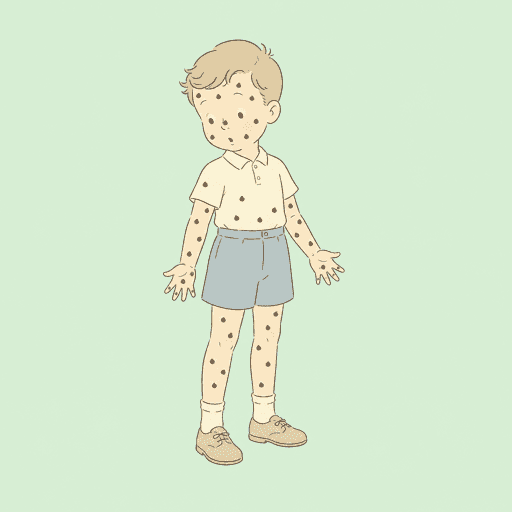
Robert Kimmel Smith’s classic children’s novel Chocolate Fever (1972) is a modern cautionary fable about a boy whose greatest love becomes his biggest problem. The story follows Henry Green, a child whose passion for chocolate is so extreme that he consumes it for every meal. His unrestrained appetite leads to a bizarre and unprecedented medical condition: He breaks out in spots made of pure chocolate. Declared a medical marvel and frightened by the ensuing commotion, Henry runs away from the hospital and embarks on a series of adventures that test his resilience and force him to confront the consequences of his actions. The novel explores the themes of The Cost of Overindulgence, Moderation as a Path to Maturity, and Compassion as an Antidote to Isolation.
Chocolate Fever has remained a lasting favorite in classrooms since its publication and has won several state children’s book awards, including the Massachusetts Children’s Book Award. Smith was a prolific author of children’s literature, best known for his award-winning novel The War With Grandpa (1984), which was adapted into a major motion picture in 2020. Much like his other popular works, such as Jelly Belly (1981), Chocolate Fever uses humor and a fantastical premise to explore common childhood challenges. The novel’s structure, in which a child’s misbehavior results in a fantastical physical transformation, places it firmly in the tradition of midcentury cautionary tales that teach moral lessons through imaginative storytelling.
This guide refers to the 2006 Scholastic Inc. edition.
Content Warning: The source material and guide feature depictions of racism, bullying, and illness.
Plot Summary
Henry Green is a boy who loves chocolate more than anything in the world. He eats it for every meal and in every conceivable form, from chocolate-dusted peaches to chocolate-bar sandwiches. His kind parents, Mr. and Mrs. Green, indulge his obsession, and his older siblings, Mark and Elizabeth, tolerate it. One Friday morning, after a breakfast of chocolate cake, chocolate cereal, and chocolate milk, Henry heads to school feeling strange. In his math class, taught by Mrs. Kimmelfarber, he discovers that little brown spots have appeared on his arm. The spots aren’t freckles, and they soon spread to his face. Alarmed, Mrs. Kimmelfarber takes him first to another teacher, Mr. Pangalos, and then to the school nurse, Molly Farthing. In the infirmary, Henry and the two women hear a series of popping noises as the brown spots suddenly erupt into chocolate-chip-sized lumps, covering Henry from head to toe.
Nurse Farthing calmly escorts the terrified Henry to the City Hospital, where he’s examined by the chief of children’s medicine, Dr. Fargo. After a thorough examination and a lab test on a sample from one of the lumps, Dr. Fargo receives a shocking phone call. He announces that the spots are made of pure, 100% chocolate. Dr. Fargo declares that Henry has made medical history with the world’s first case of “Chocolate Fever” and is, for all intents and purposes, a “walking candy bar” (40). Overwhelmed by the ensuing medical commotion and the doctors poking and prodding him, Henry panics. He leaps from the examining table and bolts from the hospital, running through the city streets with a crowd of doctors, nurses, and police officers in pursuit. He eventually escapes and hides in a garage, where he decides that he can’t return home for fear of being taken back to the hospital. He resolves to stay away until the spots disappear.
After leaving the garage, Henry walks through a schoolyard where a group of bullies surrounds him and mocks his appearance. Thinking fast, Henry invents a story about his condition, warning them that Chocolate Fever is a highly contagious and deadly disease. His bluff works, and the frightened boys back away, letting him pass. As he leaves, one boy recognizes him from a news report about a missing child. Henry denies his identity and runs away again.
That night, as he stands by a highway, a massive diesel truck stops for him. The driver, a large and friendly Black man named Mac, offers him a ride. In the dark cab, Mac doesn’t notice Henry’s spots. Later, when they stop for a meal, Mac turns on the light and sees Henry’s condition. Henry expects to be thrown out, but Mac is completely unfazed. He shares his own life experience of being treated as “unique,” explaining how being stared at for being Black taught him to be proud of his differences. Mac convinces Henry that running away is hurting his worried parents.
As they’re looking for a telephone so that they can call Henry’s parents, two hijackers named Louie and Lefty hold them at gunpoint. The thieves believe that they’re seizing a valuable cargo of furs. They force Mac and Henry into the sleeping bunk and drive the truck away. When Mac learns what they think they’re stealing, he bursts into laughter, revealing that the truck is actually full of candy bars. The dismayed hijackers proceed to their remote cabin hideout. There, as they hold Henry and Mac captive, a pack of dogs suddenly bursts into the cabin, drawn by the irresistible aroma of Henry’s chocolate spots. The dogs swarm and lick Henry joyfully. In the ensuing chaos, Mac swiftly disarms the confused Louie and Lefty. The dogs’ owners arrive, followed by the local police, who arrest the hijackers.
With the crisis averted, Mac and Henry continue to their destination, a candy warehouse owned by a kind, elderly man named Alfred “Sugar” Cane. Mr. Cane listens intently to Henry’s story. He then reveals that, as a boy, he also loved chocolate to excess and experienced the very same illness. Mr. Cane explains that the cure for Chocolate Fever is twofold. First, Henry must learn that too much of a good thing can be harmful. Henry, reflecting on his ordeal, agrees that he has had far too much chocolate. Satisfied that Henry understands, Mr. Cane provides the second part of the cure, a small box of vanilla pills. He explains that vanilla, as the opposite of chocolate, will counteract the fever. He also reveals that his own experience inspired him to spend his life bringing the joy of chocolate to the world in a responsible way. By the time Mac drives Henry home, the vanilla pills have worked, and all the chocolate spots have vanished.
The following Sunday morning, at breakfast, Henry’s mother offers him pancakes with his favorite chocolate syrup. Henry politely declines, asking for maple syrup instead, a sign that he has truly learned his lesson. He then notices a canister of cinnamon on the table, and after trying some, begins to wonder if there might be such a thing as “Cinnamon Fever.”

Get in-depth, chapter-by-chapter summaries and analysis from our literary experts.
- Grasp challenging concepts with clear, comprehensive explanations
- Revisit key plot points and ideas without rereading the book
- Share impressive insights in classes and book clubs