Chocolate Fever
A modern alternative to SparkNotes and CliffsNotes, SuperSummary offers high-quality Study Guides with detailed chapter summaries and analysis of major themes, characters, and more.
Summaries & Analyses
Quizzes
NEWReading Tools
Chapters 1-3Chapter Summaries & Analyses
Chapter 1 Summary: “Meet Henry Green”
Henry Green lives in a city apartment with his parents; his 10-year-old brother, Mark; and his 13-year-old sister, Elizabeth. Henry loves chocolate more than anything, and his diet consists almost entirely of it. His breakfast includes chocolate cake and chocolate cereal, he eats chocolate-bar sandwiches for snacks, and he adds chocolate syrup to foods like mashed potatoes. His parents, who are described as “not as wise as they [a]re kind” (15), keep the pantry stocked with chocolate treats just for him. Despite his extreme diet, Henry is thin, has no cavities, is of average height, and has always had clear skin. This, however, was only true until the day the story begins.
Chapter 2 Summary: “A Strange Feeling”
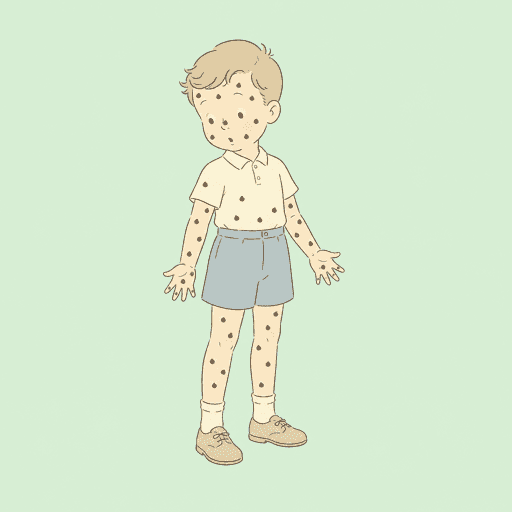
On a Friday morning, Henry takes a handful of chocolate kisses to school. On the walk there, he feels strange and uncharacteristically subdued, not even smiling at the crossing guard, Mrs. Macintosh. In the schoolyard, he’s quiet and irritable with his best friend, Michael Burke, telling him that he has a feeling something is about to happen. The feeling persists all morning. During math class, Henry’s teacher, Mrs. Kimmelfarber, asks him a question about fractions. Henry is distracted, staring at his arm and hand, where he has just discovered little brown spots that weren’t there when he woke up. He answers her question by saying, “Little brown spots all over” (23).
Chapter 3 Summary: “Mrs. Kimmelfarber’s Problem”
The class erupts in laughter at Henry’s answer, embarrassing him. Mrs. Kimmelfarber pulls Henry to the window to examine his arm and initially dismisses the spots as freckles. Henry insists that they can’t be, as his father says he has “clear and delicate skin” (25). Concerned that it could be measles or chicken pox, Mrs. Kimmelfarber summons another teacher, Mr. Pangalos, for a second opinion. After examining Henry, Mr. Pangalos agrees that the spots are just freckles, but he smells chocolate. Mrs. Kimmelfarber suddenly exclaims that the spots are now appearing on Henry’s face. The two teachers watch as more spots pop up on his skin, and Henry begins to cry.
Chapters 1-3 Analysis
The novel’s first section quickly establishes the story as a midcentury candy cautionary tale, a genre that uses fantastical consequences to teach lessons about moderation. The narrator’s direct address to the reader, “Can you believe that?,” and the folkloric suggestion that Henry might have been “hatched […] from a chocolate bean” establish a fable-like tone (13), signaling that a moral lesson will follow. Through moments like the narrator’s cataloging of Henry’s breakfast, which includes “[c]hocolate cake, a bowl of cocoa-crispy cereal and milk (with chocolate syrup in the milk to make it more chocolatey)” (16), Smith immediately positions chocolate as a motif representing The Cost of Overindulgence. The protagonist’s single-minded desire is enabled by his parents, and the pointed description that Mr. and Mrs. Green are “not as wise as they [a]re kind” criticizes how their permissiveness removes any external check on their son’s behavior (16). Because his parents don’t curtail his indulgence, the narrative ensures that Henry must confront the physical and social repercussions by himself. This foundation establishes the central theme of the ramifications of overindulgence, positioning Henry’s eventual ailment as a direct and tangible result of his immoderate lifestyle, a pattern common in the didactic children’s literature of its time.
The detailed inventory of chocolate in the Green family pantry emphasizes the depth of Henry’s obsession, elevating it from a simple preference to a defining character trait. The kitchen is stocked with a “giant supply of chocolate cookies, chocolate cakes, chocolate pies, and chocolate candies of every kind” all reserved “just for Henry” (17). This meticulous listing transforms the pantry into a shrine for his singular passion. The narrative reinforces this idea by systematically listing all the potential negative effects of excessively consuming sweets that Henry doesn’t suffer, such as his lack of cavities and his clear skin. This contrast establishes a kind of magical immunity, suggesting that the normal rules of cause and effect do not apply to him. This illusion of a consequence-free existence is important to the story’s moral structure, as its eventual, dramatic shattering teaches a lesson about limits.
Henry’s walk to school is a key tonal shift, moving from a depiction of indulgence to the first stirrings of internal unease. His uncharacteristic quietness and his irritable retort to his best friend signal a psychological disruption that precedes any visible symptoms. When Henry voices his premonition, “I have the feeling something’s going to happen, and I don’t know what” (21), the narrative transforms an ordinary school day into a moment of suspense. This “strange feeling” suggests that the consequences of his extreme diet are manifesting first as a form of anxiety and alienation, disrupting his social interactions and sense of self before any physical evidence appears. The narrative uses this psychological shift to demonstrate that the harmony between Henry and his love for chocolate is already broken, foreshadowing a lesson in Moderation as a Path to Maturity that will be as much emotional as it is physical.
The discovery of spots on Henry’s arm during math class moves his problem from a private feeling to a public spectacle, causing him immediate social humiliation. His distracted answer to Mrs. Kimmelfarber’s question, “Little brown spots all over” (23), prompts the class to erupt in laughter, turning his personal alarm into a source of public ridicule. This moment introduces the motif of the brown spots, which function as a physical manifestation of The Cost of Overindulgence and make a private habit visible for all to judge. Mrs. Kimmelfarber’s initial dismissal and Mr. Pangalos’s clinical prodding further isolate Henry, making him feel like a medical curiosity. Their inability to diagnose the spots as anything other than freckles emphasizes the unprecedented, magical nature of his condition. Henry’s insistence that he possesses “clear and delicate skin” reveals his initial denial (25), as his identity is tied to the very immunity to chocolate’s physical effects that he’s now losing. The spots, therefore, become an emblem of his excess, initiating his alienation from peers and challenging his fundamental sense of self.

Get in-depth, chapter-by-chapter summaries and analysis from our literary experts.
- Grasp challenging concepts with clear, comprehensive explanations
- Revisit key plot points and ideas without rereading the book
- Share impressive insights in classes and book clubs