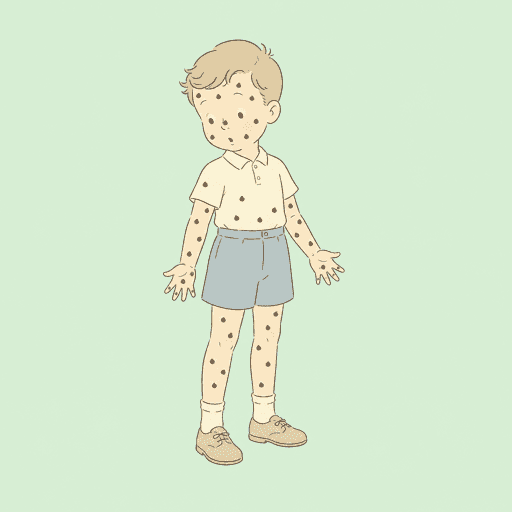
Chocolate Fever
A modern alternative to SparkNotes and CliffsNotes, SuperSummary offers high-quality Study Guides with detailed chapter summaries and analysis of major themes, characters, and more.
Summaries & Analyses
Quizzes
NEWReading Tools
Chapters 7-9Chapter Summaries & Analyses
Content Warning: This section of the guide includes discussion of racism and bullying.
Chapter 7 Summary: “In the Schoolyard”
While walking through a schoolyard, Henry is surrounded by a group of boys led by an older student named Frankie. They bully Henry for his appearance, calling his spots “ugly” and referring to them as warts. As the boys close in threateningly, Henry quickly invents a story to protect himself. He claims to have a rare, contagious, and deadly disease called “Chocolate Fever.” He warns them that anyone who touches him will catch it and describes symptoms that include a swollen head and breaking out in chocolate spots. The bluff works, and the frightened boys back away, creating a path for Henry to leave. Just as he’s clear of the group, one boy recognizes him from a radio report as Henry Green, a patient who escaped from a hospital. When confronted, Henry denies his identity and runs away.
Chapter 8 Summary: “Mac”
After dark, Henry is picked up on the highway by a friendly Black truck driver named Mac. When they stop for a meal, Mac turns on the cab light, seeing Henry’s spots for the first time. Henry expects to be rejected, but Mac is unbothered and shares his food. Henry explains that he’s running away because his “Chocolate Fever” makes him feel ugly. Mac relates Henry’s experience of being stared at to his own experiences with racism, advising Henry to see himself as “unique” rather than ugly and to take pride in his distinctiveness. Mac then gently scolds Henry for worrying his parents by running away. He proposes a plan: They will find a telephone to call Henry’s parents, reassure them that he’s safe, and tell them that he won’t return to the hospital. Feeling much better, Henry agrees.
Chapter 9 Summary: “Hijacked”
As Mac prepares to drive to a telephone, two armed men, Louie and Lefty, suddenly appear and hijack the truck. They force Mac and Henry into the sleeping bunk at gunpoint and take control of the vehicle. Louie reveals that they believe they’re stealing a valuable cargo of furs. Upon hearing this, Mac erupts into uncontrollable laughter. He informs the stunned hijackers that the truck isn’t carrying furs but is filled with thousands of chocolate candy bars. Dismayed by their mistake, the two thieves are momentarily unsure what to do, but Louie decides that they will proceed to their hideout with the truck anyway.
Chapters 7-9 Analysis
In the novel’s third section, Henry’s condition propels him to take greater ownership of his story. When a group of boys surrounds him in the schoolyard, his physical ailment transforms from a private medical crisis into a public spectacle of social torment. The bullies’ cruel reaction to the big brown spots externalizes the shame that Henry feels, demonstrating how his condition marks him for isolation. Faced with a closing circle of boys and the threat of violence, however, Henry exhibits a newfound agency. He tells the boys, “I have Chocolate Fever, one of the most horrible and catching diseases in the world” (52). In this moment, Henry weaponizes his condition, turning the source of his shame into a tool for self-preservation. This act of creative storytelling is a significant step in his development as he begins to actively shape his own narrative. Henry’s lie is a desperate but resourceful act, showing his capacity to adapt and control his circumstances rather than be defined by them.
The cruelty of the schoolyard encounter is immediately contrasted by the introduction of Mac, the truck driver who offers Henry a ride. When Mac turns on the cab light and sees Henry’s spots, his reaction is one of casual acceptance, and he offers the boy a sandwich. This simple gesture of kindness is an important moment for the theme of Compassion as an Antidote to Isolation. Where doctors pathologized him and peers bullied him, Mac offers unconditional human connection, creating the first truly safe space that Henry has occupied since fleeing the hospital. Mac’s unbothered demeanor and willingness to share his meal validate Henry’s personhood beyond his appearance. This interaction establishes Mac as an important mentor figure and suggests that acceptance is a powerful treatment for the social sickness of ostracism.
In his conversation with Henry, Mac reframes the boy’s shame by drawing a parallel to his own experience with racism. He tells Henry that being stared at for being Black taught him to see himself as “unique” and special, directly invoking the slogan “black is beautiful” (63). This line situates the novel in the cultural context of the 1970s and the “Black Is Beautiful” movement, which sought to reclaim Black identity from a history of racist denigration. While the analogy problematically equates a magical, self-inflicted illness with the systemic reality of racism, its function within the narrative is to provide Henry with a new lens through which to view himself. Mac’s wisdom encourages Henry to transform his perceived flaw into a source of pride. Furthermore, Mac gently guides Henry toward emotional growth by reminding him of his parents’ worry, pushing him to consider the consequences of his actions on others. This advice connects to Moderation as a Path to Maturity as Henry begins to move beyond his self-centered panic and toward a more responsible and empathetic outlook on his situation and his relationships.
The tone and genre shifts in these chapters guide the reader through a rapid cycle of emotional states. Chapter 7 presents a realistic social issue, capturing the dread and danger of being targeted by a group of bullies. Chapter 8 then pivots into a quiet, contemplative scene of mentorship and emotional healing, its pacing slow and its dialogue focused on interior growth. This moment of peace is immediately disrupted by the start of Chapter 9, which throws the characters into a low-stakes crime comedy. The progression from social drama to intimate character study to slapstick adventure keeps the narrative light and episodic, reinforcing its classification as a fantastical tale rather than a grim story of illness and flight. The danger, even when presented at gunpoint, is never truly dire; the lessons in self-reliance, compassion, and maturity remain the primary focus, a structure characteristic of the midcentury candy cautionary tale.
The section culminates in an abrupt shift in tone with the arrival of the hijackers, Lefty and Louie, a scene that uses absurdist humor to comment on the nature of desire. The tension of the holdup immediately dissolves into comedy when Mac reveals that the hijackers haven’t stolen valuable furs but a truckload of chocolate bars. His “[g]reat gusts of laughter” at their mistake underscore the farcical nature of the encounter and add a new dimension to the chocolate motif (70). The very substance of Henry’s overindulgence is now the punchline of a failed robbery. This development aligns the story with the tradition of the candy cautionary tale, where the consequences of excess are more instructive than truly perilous. The hijackers’ dismay at their haul of “[c]hocolate bars […] with almonds” amusingly illustrates The Cost of Overindulgence on a new level (70). The cargo that they desired so excessively that they resorted to theft turns out to be a comical disappointment. This scene is a parallel to Henry’s own journey, suggesting that the problem he sees as monumental is, from another perspective, manageable and even laughable.

Get in-depth, chapter-by-chapter summaries and analysis from our literary experts.
- Grasp challenging concepts with clear, comprehensive explanations
- Revisit key plot points and ideas without rereading the book
- Share impressive insights in classes and book clubs