It Could Have Been Her
A modern alternative to SparkNotes and CliffsNotes, SuperSummary offers high-quality Study Guides with detailed chapter summaries and analysis of major themes, characters, and more.
Summaries & Analyses
Quizzes
NEWReading Tools
Chapter 65-EpilogueChapter Summaries & Analyses
Content Warning: This section of the guide includes discussion of addiction, substance use, sexual violence and harassment, rape, child abuse, physical abuse, emotional abuse, mental illness, death by suicide, graphic violence, and cursing.
Chapter 65 Summary: “Stuart, Now”
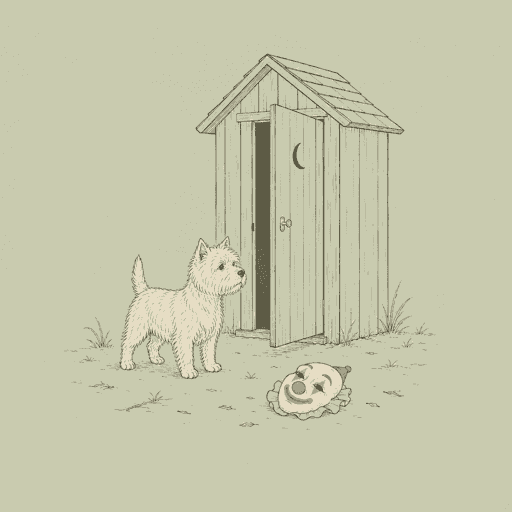
Panicked after his conversation with Jane at the pub, Stuart rushes home to Thornwood, feeling overwhelmed by the fear that Jane’s investigation will lead the police to their home. To manage his anxiety, he secretly pours himself a double measure of Jessamine’s rum. He then goes upstairs to wake Jessamine, urgently explaining that the woman who returned their dog, has been investigating them. He tells her the woman knows everything, including about Claire and Jasper. As he pleads with Jessamine to tell him what to do, he notices a face in the cracked-open bedroom door and invites the person into the room.
Chapter 66 Summary
Jane and Dexter meet in Covent Garden and drink wine. Jane expresses her horror over the revelations about Jasper’s “Patch the Clown” persona and his pattern of sexually harassing young women in his costume. She becomes emotional, thanking Dexter for his support and realizing that investigating the Black family’s life is forcing her to confront the trauma of her own childhood living with addicts. She compares her cheerful public persona to a mask, like Jasper’s. Dexter comforts her, suggesting she sell her large, isolated house, move to London, and start a private investigation agency.
Chapter 67 Summary
Jane wakes early, anxious about her plan to report her findings to the police. Her thoughts are a mix of the case’s dark details and her own existential worries. She receives an unexpected text message from Stuart, inviting her to Thornwood to talk before she goes to the police. Though she fears it could be a trap, she agrees, seeing it as an important opportunity. She messages Stuart back, warning him that she has told several people her whereabouts, including Dexter and Tobias, who will call the police if he doesn’t hear from her by 9 a.m. She also packs two knives for protection. On her way, Jane stops at the home of the Blacks’ neighbor, Spencer, and asks him to check on her if she isn’t back in a few hours. Spencer agrees, and Jane proceeds to Thornwood, where Stuart lets her inside.
Chapter 68 Summary
Inside the neglected house, Stuart makes tea for Jane and a bacon sandwich for himself. Jane notices fresh scratches on the inside of his wrist. Stuart tells her there is something she needs to hear directly “from the horse’s mouth” (323). He calls out toward the hallway, and a young woman with bleached blonde hair walks into the kitchen. She introduces herself to Jane as Daisy.
Chapter 69 Summary: “Daisy”
Daisy recounts her story, explaining that her obsession began during the COVID-19 lockdown when a police officer showed her a photo of Claire during their search of the house. She instantly recognized a family resemblance and knew that Jessamine was not her real mother. She dropped out of school and spent her days in isolation, researching Claire online and writing elaborate stories about her to post in internet forums. Her fixation amplified her resentment toward the alcoholic and abusive Jessamine. About a year ago, Daisy discovered an old photograph of her grandfather Allen, Jessamine, and a young boy with a clown’s mask on his lap. The back was inscribed with “The Last One of Us” (329). She concluded the boy in the photo was her mysterious uncle, Jasper, and became convinced he held the key to learning the truth about her mother.
Chapter 70 Summary
Daisy continues her story, explaining that she tracked Jasper to a circus in Dorset. She rented a nearby studio and brought Hugo for companionship. After watching Jasper’s sad clown act and observing his lonely life for a few days, she confronted him at his trailer. When he tried to refuse to speak with her, she threatened to reveal his location to the police. Jasper relented and agreed to meet her the next day, later sending her map coordinates for a location in the woods.
Chapter 71 Summary
In the woods, Jasper confirmed that Claire was Daisy’s mother but claimed he didn’t know what happened to her, repeatedly insisting Daisy ask Annie. When Daisy pressed him, Jasper became extremely agitated, confessing that there had been a terrible fight and that he had run away in fear. As he grew more distraught, he tried to flee. Daisy grabbed him to stop him, and they both fell. Jasper then got on top of her and began to strangle her, kicking Hugo away when the dog tried to intervene. Daisy managed to knee him in the groin, break free, and escape. Back in the present, Daisy tells Jane she couldn’t find Hugo and called Stuart for help. Stuart and Daisy then lead a tense Jane to the outhouse and unlock it, revealing Annie’s dead body.
Chapter 72 Summary
Jane is horrified by the sight of Annie’s body. Stuart explains this is why they couldn’t involve the police. Daisy confesses to pushing Annie down the stairs the previous week during a heated argument about Claire and begs Jane not to report it. Jane, clutching the knife in her bag for safety, learns that Jessamine is unaware of her mother’s death. She insists they must tell Jessamine immediately, hoping the truth might finally compel her to speak honestly about the past.
Chapter 73 Summary
In Jessamine’s squalid bedroom, Stuart attempts to explain what has happened, but Jessamine only frantically demands a drink. He finally tells her that Annie is dead, explaining that she fell during a struggle with Daisy. Upon hearing the news, Jessamine’s demeanor changes completely, and a spark of life returns to her eyes. After confirming her mother is truly dead, she urgently instructs Stuart to call the police, tells him to say that she was the one who pushed Annie, and to “let [her] tell them why” (346).
Chapter 74 Summary
When the police arrive, Jessamine tells them she pushed Annie and declares that her parents were murderers, calling Thornwood a “house of fucking horrors” (348). In Annie’s study, investigators discover a trapdoor leading to a secret basement containing the remains of Allen and seven young women: Naomi de Santo, Jody Pinkerton, Susana Perez, Elena Iannou, Jade Paris-Smith, Charaya Kim, and Claire Connolly. Jessamine tells police that Annie killed Claire and Allen in a jealous rage, knowing he was in love with Claire, and forced Jessamine to raise Claire’s baby, Daisy. She claims she pushed Annie when she saw her move to slap Daisy. Jane returns home, shaken, but finds herself deeply suspicious of the relief she saw in Jessamine’s eyes and does not trust her story.
Chapter 75 Summary: “Stuart, Now”
While a police officer supervises him, Stuart packs his belongings, moving through Thornwood in a state of numb horror. He feels culpable for having lived for a decade in the house, unaware of the bodies buried beneath the floorboards. As he listens to the sounds of the excavation team in the basement, he collects Hugo and leaves the property, certain he will never return to the dark house.
Chapter 76 Summary
A few days later, Dexter visits Jane at her country estate. They discuss the case, and Jane expresses her belief that Jasper, still missing, has likely died by suicide. Jane tells Dexter she has decided to sell her house. She explains that she has been slowly leaving her past behind over 35 years—unlike Jessamine who stayed stewing in it or Jasper who fled it all at once—and now she is finally ready to move on. She plans to move to a simple home in London. Dexter enthusiastically suggests they start a private investigation agency together called “Trevally and Son,” moving Jane to tears. Later, while walking their dogs, Jane reveals that Daisy is now living nearby with George and Spencer. She reflects that Daisy, unlike herself at that age, has Stuart’s unwavering support.
Interlude Summary: “Six Months Later”
A BBC news report announces that the body of Jasper Allen Black has been found in the woods, with his death ruled a likely death by suicide. The discovery follows a confrontation with Daisy Black, who has been revealed to be the daughter of Claire Connolly, the final victim of the “Vale of Health Killers” (361), not Jessamine Black’s daughter as previously believed. Daisy had used the online forum Reddit to track Jasper down. When she confronted him with the truth about her parentage, he tried to strangle her before escaping. The report also reveals that Jasper, who worked as a circus performer named Patch the Clown, had been terrorizing young women at night while in costume. His involvement in the murders at his childhood home is still unknown. His sister, Jessamine, is in a rehabilitation facility awaiting trial for manslaughter in their mother’s death.
Chapter 77 Summary: “Stuart, One Month Later”
On Christmas Eve, seven months after the events at Thornwood, Stuart celebrates the holiday with his brother’s family for the first time in 10 years. He picks up Daisy from the house she shares with her old childhood friend George and George’s dad, Spencer. Daisy, who now looks more mature with a new haircut and clothes, has legally changed her name to Daisy Connolly. As they look at the boarded-up Thornwood, Daisy explains that living so close helps her process the trauma and feel connected to her birth mother. She expresses no sympathy for Jessamine, stating she does not consider her a victim.
Epilogue Summary
Eighteen years earlier, Jasper visits an EMDR therapist, Dr. Twist, to address a severe childhood trauma that has caused him to develop upsetting behaviors. When the therapist instructs him to mentally revisit the event, Jasper recalls the night his abusive father was killed. In his mind, he returns to the secret basement where his father imprisoned young women. He sees his father dead and his sister Jessamine standing over Claire’s body, holding the baby and the paring knife he had smuggled to Claire. Jessamine claims Claire killed their father and had to be stopped from escaping, but Jasper challenges her about why she chose to kill Claire when she could have let her go free. The realization that his sister was as evil as their father convinced Jasper that his entire family was corrupt with an evil “virus” that he also carried. The section concludes with Jasper confirming to Dr. Twist that he is mentally present at the scene of the trauma, ready to begin the therapy.
Chapter 65-Epilogue Analysis
The personal revelations Jane experiences as she pursues the truth surrounding the Black family parallel her investigation with an excavation of her own past, underscoring The Inherited Nature of Trauma. As Jane assembles the pieces of the Thornwood mystery, she takes note of the emotions it triggers in her, asking, “What is it about all of this that’s bringing her into such a heightened state of emotion? […] Every step she takes down the path of the Blacks’ life, she takes another step down her own, heading closer and closer toward the core of it all” (317). Jane’s admission that her cheerful public image—”Brave face, red lipstick, big smile, big laugh, big earrings, big bright beautiful Jane”—is as much a “2D slapped-on persona as Jasper’s hideous Patch the Clown” (318), highlighting the protective facades the characters build to manage unbearable trauma. For Jane, her own sunny persona is a lifelong defense against the “black terror of being a child living in a house with addicts” (317). Confronting the Black family’s secrets forces her to acknowledge her own carefully constructed identity as a performance. Jane’s self-awareness catalyzes her decision to sell her isolated country house, an act that signifies a deliberate break from the self-imposed isolation that mirrors the toxic insularity of Thornwood. She finds purpose in a professional partnership with her stepson Dexter, choosing to build a future based on authentic connection and chosen family.
The novel’s resolution sees its surviving protagonists deliberately choosing community over seclusion as an antidote to trauma. The healing and growth they experience reinforces The Dangers of Isolation by contrasting them with the benefits of connection. Stuart’s final departure from the “dark, dark house” (356), after a decade of entrapment, abuse, and unwitting complicity, severs his connection to the toxic environment that nearly destroyed him. In a parallel arc, Jane’s decision to sell her own vast, lonely estate represents a rejection of the emotional and physical isolation that has characterized her adulthood. Stuart returns to his brother’s family, Jane moves to London to be closer to Dexter, and Daisy finds a new, supportive home with George and Spencer. This collective turn toward connection and mutual care suggests that healing from the kind of evil fostered at Thornwood can only begin by dismantling the isolated spaces where it is allowed to fester unseen.
The narrative structure of the book’s conclusion, with its rapid time jumps and final flashback, deliberately complicates the idea of a neat resolution and questions the efficacy of public justice. The “Six Months Later” news report provides an official summary of the case, cementing a public narrative in which Jasper is a disturbed loner and Jessamine is a traumatized victim awaiting a manslaughter trial. However, Jewell immediately subverts this neat summary with the epilogue. By giving the final, private word to Jasper’s memory of Jessamine’s crime, the novel exposes the deep gap between the public assumptions and the absolute truth. Jessamine has successfully manipulated the very systems designed to hold her accountable, escaping a murder charge by leveraging her genuine trauma. This structural choice encourages the reader to question the degree to which Jessamine’s cruelty and violence are intrinsic or a product of the abuse she suffered.
While the secrets of Thornwood have been unearthed, the most calculating perpetrator has not been fully exposed, suggesting that the most insidious forms of evil can adapt, perform, and ultimately evade true consequences.
In contrast, Jessamine’s decision to perpetuate deception, leveraging Annie’s deaths and partial truths to conceal her own dark secrets, results in her continued incarceration, both literally and figuratively. When Jessamine learns her mother is dead, the “spark” that returns to her eyes is the recognition of an opportunity. Her subsequent confession to the police is ultimately revealed to be another performance. By declaring Thornwood a “house of fucking horrors” (348), she appears to unburden herself of a lifetime of secrets, exposing the monstrous reality hidden behind the family’s affluent Hampstead address. However, the epilogue’s revelation—that Jessamine, not Annie, murdered Claire—reveals this confession as a calculated, self-serving performance—continuing the Black family’s Illusion of Middle-Class Respectability rather than breaking from it. She seizes the moment to construct a narrative of victimhood, positioning herself as a long-suffering daughter who finally snapped while protecting Daisy. This version of events, while containing elements of truth about her parents’ abuse, strategically omits her own cold-blooded murder. Jane’s immediate, instinctual distrust of Jessamine’s relief foreshadows the epilogue’s reveal. Jessamine finishes the novel incarcerated, awaiting trial for manslaughter, and still bound by her lies.
The epilogue employs the device of Jasper’s EMDR therapy session to reinforce the novel’s The Inherited Nature of Trauma. The narrative travels 18 years into the past to locate the source of Jasper’s destructive behavior: Jessamine’s murder of Claire to keep her from escaping despite the fact that their father is finally dead. Jasper notes that “in that moment, there, came the knowledge, blinding, penetrating, all-consuming, that my sister was as evil as my father, that we, this family, were made of bad things, sickening things, that it ran through all of us like a virus, and that I had it too” (368-69). This scene uses the metaphor of contagion passed between generations. The Black siblings offer three distinct responses to this inheritance: Jessamine fully succumbs to the “virus” and becomes a perpetrator who mimics her parents’ cruelty and manipulation; Jasper is psychically destroyed by his awareness of the contagion, his attempts at therapy ultimately failing to prevent his self-destruction; and Daisy actively severs her connection to their lineage by changing her surname to Connolly—a symbolic rejection of the toxic Black legacy. Her stated refusal to see Jessamine as a victim demonstrates an unwillingness to participate in the cycle of abuse and excuse-making, allowing her to forge an identity rooted in truth rather than inherited corruption.

Get in-depth, chapter-by-chapter summaries and analysis from our literary experts.
- Grasp challenging concepts with clear, comprehensive explanations
- Revisit key plot points and ideas without rereading the book
- Share impressive insights in classes and book clubs
Related Titles
By Lisa Jewell










Featured Collections
Class
View Collection
Class
View Collection
Community
View Collection
Daughters & Sons
View Collection
Family
View Collection
Fathers
View Collection
Fear
View Collection
Good & Evil
View Collection
Mothers
View Collection
Safety & Danger
View Collection
Truth & Lies
View Collection