It Could Have Been Her
A modern alternative to SparkNotes and CliffsNotes, SuperSummary offers high-quality Study Guides with detailed chapter summaries and analysis of major themes, characters, and more.
Summaries & Analyses
Quizzes
NEWReading Tools
Themes
Content Warning: This section of the guide includes discussion of addiction, substance use, sexual violence and harassment, rape, child abuse, physical abuse, emotional abuse, mental illness, death by suicide, graphic violence, and cursing.
The Inherited Nature of Trauma
In It Could Have Been Her, Jewell demonstrates that severe, unaddressed trauma acts a corrupting force passed through generations in cycles of addiction, violence, and psychological distress. The novel posits that this legacy continues its destructive path until a conscious effort is made to break the chain. The inhabitants of Thornwood illustrate this argument as the monstrous actions of the Black parents directly shape the pathologies of their children. Through the journey of Jane, the novel’s protagonist, whose own past trauma fuels her quest; and the resilience of Daisy, who must confront her family’s history to find freedom. Jewell argues that while trauma’s legacy is pervasive, it is not inescapable. Breaking free from such a legacy, the novel posits, requires intervention and a painful reckoning with the past.
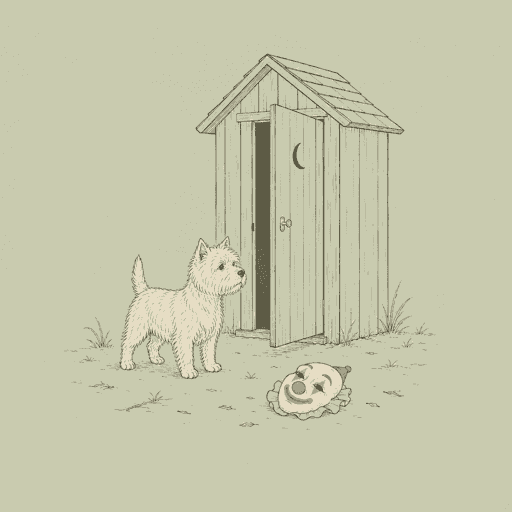
Jasper and Jessamine exemplify the destructive impact of their parents’ toxic and violent legacy. Raised in a “house of fucking horrors” (348), they process their father’s sadistic abuse of the au pairs in different but equally destructive ways. Jasper, who witnesses the violence firsthand, develops the alter ego “Patch the Clown,” a persona through which he reenacts the terror he observed by harassing and assaulting young women while wearing a mask. The novel positions his actions as a distorted echo of his father’s cruelty. Jessamine’s trauma manifests as severe alcoholism and a pattern of emotional and physical abuse directed at her partner, Stuart. Her violent outbursts, manipulative behavior, and ultimate retreat into a bed-bound, addiction-fueled existence are the direct consequences of the horrific secrets, violence, and constant fear that defined her upbringing.
Jane’s character arc explores how trauma can be inherited vicariously, shaping behavior even from a distance. Her own “raw, brutal childhood” with alcoholic parents who neglected her and failed to give her the safety and emotional stability she craved drives her compulsion to investigate Daisy’s disappearance. Jane recognizes her obsession with Daisy’s disappearance as an attempt to heal her own past, admitting, “maybe if I could save her, I could possibly, you know, save myself” (197). Her near-fatal encounter with Allen 26 years prior ties her personally to the Black family’s toxicity, giving her a survivor’s stake in unraveling their secrets. Her relentless investigation becomes a way of confronting the specter of her own neglect and the predators who prey on the vulnerable, showing how the shadows of one’s past can dictate the focus of one’s present.
Both Jane and Daisy reinforce the novel’s argument that cycles of abuse and neglect can be broken through connection, community, and actively refusing to be defined by the actions of others. Despite being raised in an environment of lies, neglect, and psychological torment, Daisy ultimately finds the strength to seek the truth, taking action to find Jasper and uncover the secrets surrounding her birth mother’s death. Her confrontation with Jasper and later her role in the confrontation with Annie forces the family’s secrets into the light. Stuart, who endures years of abuse from Jessamine, remains steadfast in his mission to protect Daisy, providing the stability and unconditional love she never received from her family. His liberation comes from finally speaking the truth rather than concealing it and encouraging Daisy to do the same. He invites Jane into Thornwood past the boundaries keeping all the Blacks’ secrets hidden, and tells her, “there’s something you need to know. And I think—well, we all think—it would be better coming direct from [Daisy]” (323). Daisy and Stuart’s eventual departure from Thornwood represents freedom from the physical and psychological prison of the Black family’s legacy.
The Illusion of Middle-Class Respectability
Jewell builds her novel on the premise that beneath the surface of a seemingly idyllic life, deep monstrosity can fester. She explores through the Black family, whose picturesque Hampstead home provides a respectable facade for decades of depravity. The novel methodically dismantles the illusion that social status, a charming home, and a conventional family structure are safeguards against violence, neglect, and abuse. Instead, it argues that these very markers of middle-class respectability can serve as the perfect camouflage for horrific crimes, allowing perpetrators to operate with impunity while hiding in plain sight.
The family home, Thornwood, is the primary symbol of this deceptive duality. Located in the exclusive and secluded Vale of Health, the house is outwardly a quaint cottage, the kind of property that signifies affluence and taste. However, its charming exterior conceals a dark secret. Below the floorboards of Annie’s study lies a “rabbit warren of subterranean rooms” (351), a makeshift prison and graveyard where Allen violated and buried his victims. This stark contrast between the home’s public image and its private reality reinforces the novel’s premise. Jane’s first view of the house sparks the memory that links her investigation in the present to the violence of the past. As she and Dexter approach Thornwood, Jane remembers Allen bringing her there 26 years prior—she’d “felt a pulse of something wrong then, a distant siren in her consciousness warning her of something she could not quite put her finger on” (11-12). Jane’s memory immediately imbues the present-day Thornwood with a sense of ominous foreboding that belies its façade of respectability.
By invoking both Allen and Annie’s POVs, Jewell uses narrative tone and voice to emphasizes the illusion of normalcy and status they project. In Allen’s first POV chapter, he explicitly describes the idealized image he seeks to embody:
From a very young age […] I wanted apple trees and a neatly folded newspaper and something nice to eat when I got home from work. As a child I wanted to be like the men in the illustrations on the covers of old-fashioned magazines with a pipe and handkerchief in their top pocket, a small child by my side. I wanted to be a family man (61).
The calm, matter-of-fact tone of Allen’s narration reinforces his public persona as a doting family man, which allows him to move through society without suspicion, while in private he is a serial rapist and murderer who preys on vulnerable women. Similarly, Annie’s first chapter begins by immediately attempting to rewrite the predatory narrative of their relationship: “I met my husband when I was a child of thirteen. He was nineteen. Not how it sounds, I can assure you” (117). Like Allen, Annie is much more concerned with the idea of things than with the reality. She describes training to be a nurse, saying, “I didn’t really want to be a nurse, but I loved the uniform, the accessories, the idea of being adored” (118). She is a woman who demands her coffee be served on a saucer with a biscuit, a pantomime of propriety that she performs while actively enabling her husband’s crimes and concealing multiple murders. Later, her performance as the wronged, elegant wife of an unfaithful husband is a calculated deception that protects the family’s dark secrets from outside scrutiny.
Allen and Annie’s skill at concealment and the performance of normalcy becomes the legacy they pass down to their children. Jessamine attempts to embody the same façade of respectability, but her trauma-fueled addiction to alcohol makes a convincing illusion impossible to maintain. By choosing to drink in a pub rather than at home, Jessamine puts on a performance of social drinking to avoid the stigma of being an alcoholic mother. Stuart sees through this act immediately, but ultimately helps her perpetuate it, maintaining the house, taking care of Daisy, waiting on Annie, and enabling Jessamine’s self-destructive moods. Jasper hides his own pain and destructive impulses behind the mask of his clown persona, Patch. Jasper’s landlady and fellow clowns see through his curated performance to the wounded child beneath it. As Stella tells Jane, “I felt uncomfortable being in the same room as him. He had this . . . aura. You could feel it leaking out of him, like his initial charm was a veneer that was chipping away, peeling off, and under it was this festering child, this desperate man” (249). Ultimately, both Jasper and Jessamine find themselves crushed under the weight of maintaining these performances and give into their private self-destructive impulses—Jessamine ends up incarcerated and Jasper dies by suicide.
The Dangers of Isolation
It Could Have Been Her contends that isolation, both geographical and psychological, creates the ideal conditions for extreme abuse to flourish undetected. By situating the Black family in a secluded enclave and depicting their internal world as a closed-off system of secrets, the novel illustrates how severing individuals from outside observation and support enables perpetrators and traps victims. The physical and emotional remoteness of Thornwood and its inhabitants allows decades of horrific crimes to go unnoticed, arguing that community and connection are essential safeguards against hidden violence.
The geographical setting of the Vale of Health is instrumental in facilitating the Blacks’ crimes. The area is described as a “sleepy Dickensian hamlet […] cut off from the rest of the world” (12), a physical isolation that minimizes the chance of witnesses or intervention. This seclusion allows Allen to imprison and murder multiple women without drawing attention. The social isolation of the family complements this geographic remoteness. A neighbor, Spencer, notes that the family has always been “a little strange” and that it is best to “stay clear of things like that” (114), showing a deliberate separation between the Blacks and the surrounding community. This isolation creates a pocket universe where the normal rules of society do not apply, allowing the family’s depravity to fester for decades without any external checks.
The Blacks use isolation as a tool of control within their home. The au pair girls Allen lures to the house are systematically stripped of their freedom, first confined to a locked attic room and later imprisoned in subterranean cells. This extreme physical isolation ensures their suffering is invisible and their escape impossible. When Stuart finds an old photograph of Claire in the attic bedroom, he notices that “there was something else on the floor, just between [her] legs […] when I took a photo of it on my smartphone and enlarged it with my fingers, I saw [it] was a pair of metal leg restraints” (302). The family continues to use this tactic years later. After Jessamine attacks Stuart, he is locked in the same attic room, cut off from any outside contact. When Jessamine finally returns his phone, he finds that Jessamine has deleted the “contacts: my son, my brother, my nephews, Blaise’s mum, my son’s mum. All gone. All of them” (266). Like her father, Jessamine uses isolation as a method of control, suggesting it’s an ingrained family practice, used to silence and dominate anyone who threatens their closed system. By locking Stuart away, Jessamine and Annie repeat the pattern of abuse established by Allen.
The psychological effects Daisy suffers as a result of this insularity push her to take desperate action to reestablish contact with the outside world. Daisy’s isolation following the COVID-19 lockdown pushes her to seek virtual connection online. Daisy tells Jane:
I wrote long, elaborate stories about me and Claire, about how she had become pregnant with me, how she had been trapped here in this house with my crazy drunk mother and my weird, evil grandmother and Allen, the grandfather I had never met. I posted the stories on flash fiction forums and got quite a following (328).
The connections she makes with her online community give her the motivation she needs to leave Thornwood and gather clues about her biological mother. Her temporary escape leads Jane to Thornwood, which ultimately sets both Daisy and Stuart free.

Unlock every key theme and why it matters
Get in-depth breakdowns of the book’s main ideas and how they connect and evolve.
- Explore how themes develop throughout the text
- Connect themes to characters, events, and symbols
- Support essays and discussions with thematic evidence
Related Titles
By Lisa Jewell












Featured Collections
Class
View Collection
Class
View Collection
Community
View Collection
Daughters & Sons
View Collection
Family
View Collection
Fathers
View Collection
Fear
View Collection
Good & Evil
View Collection
Mothers
View Collection
Safety & Danger
View Collection
Truth & Lies
View Collection