It Could Have Been Her
A modern alternative to SparkNotes and CliffsNotes, SuperSummary offers high-quality Study Guides with detailed chapter summaries and analysis of major themes, characters, and more.
Summaries & Analyses
Quizzes
NEWReading Tools
Character Analysis
Content Warning: This section of the guide includes discussion of addiction, substance use, sexual violence and harassment, rape, child abuse, physical abuse, emotional abuse, mental illness, death by suicide, graphic violence, and cursing.
Jane Trevally
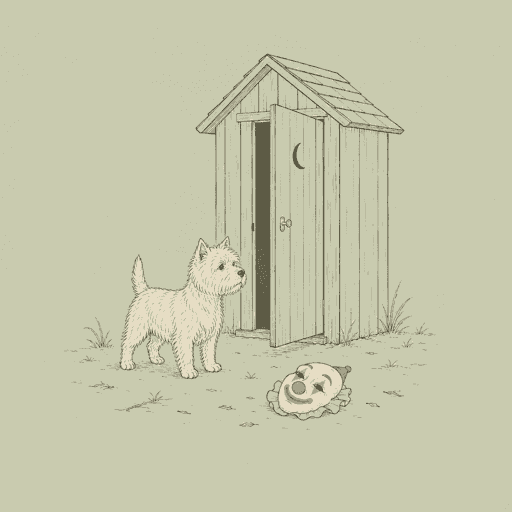
Jane Trevally is the novel’s protagonist, a dynamic and round character whose investigation into a young girl’s mysterious disappearance catalyzes a deep personal transformation that allows her to finally heal from her own childhood trauma. A 55-year-old divorcée living alone in her crumbling ancestral home, Rosebery Hall, Jane feels her life lacks meaning, describing herself as a “nosy old bag who’s barely worked a day in her life” (30). Her discovery of the lost dog, Hugo, provides her with a much-needed sense of purpose and leads her into a tangled mystery of long-buried secrets and lies. Jane’s primary investigative tool is her empathetic nature; she possesses an innate ability to connect with people and inspire their trust, a skill she uses to gather information from a wide range of characters, from circus performers to a reclusive psychotherapist. This innate talent for investigation stems from her own difficult past, growing up with parents who were addicts.
Jane’s investigation into the Black family becomes a subconscious journey into her own history. She sees a reflection of her younger self in Daisy, another young woman shaped by a dysfunctional and traumatic home life. This parallel fuels her determination, as she feels that if she can “save [Daisy], [she] could possibly, you know, save [herself]” (197). Her pursuit of the truth is fueled by the desire to confront the destructive legacies of toxic families. The horrors she uncovers at Thornwood force her to re-evaluate her own relationship with her past, particularly her attachment to Rosebery Hall, a house that, like Thornwood, harbors past pain, underscoring the novel’s thematic focus on The Inherited Nature of Trauma. Jane’s decision to finally sell the property signifies her liberation from this past, allowing her to embrace a future defined by the purpose she has forged for herself. Her arc is defined by this evolution from a directionless woman haunted by her history to a focused, self-assured investigator.
Stuart Tucker
Stuart Tucker is the deuteragonist—a character second in importance to the protagonist—and a key narrator, a complex and round character who is both a victim of abuse and a passive enabler. Initially presenting himself as a self-proclaimed “free spirit” (121) living off a small inheritance, Stuart’s desire for an “easy life” (204) leads him into the manipulative orbit of Jessamine. He becomes trapped at Thornwood, first by a desire for a comfortable home and then by Jessamine’s escalating psychological and physical abuse. He endures horrific violence, including having his ear mutilated, and is subjected to extreme control, such as being locked in an attic room. Stuart’s defining characteristic is his passivity. He chooses to remain in the abusive household, justifying his decision as a necessary sacrifice to protect Daisy, for whom he is a surrogate father figure. He functions as the story’s primary internal witness, aware that something is deeply wrong within the house but too afraid of the consequences to take decisive action.
Jewell presents Stuart as a genuinely caring man who provides Daisy with the only stability and affection she has ever known. Despite his desperate desire to leave Thornwood, he promises Daisy he’ll stay “until [she’s] ready to fly” (269). However, his fear of Jessamine and his desire to avoid conflict make him complicit in the family’s culture of secrecy. He deliberately conceals Daisy’s return from Jane and withholds important information from the police about Annie’s death and the family violent history, believing he is protecting Daisy when, in fact, he is perpetuating a dangerous status quo. His relationship with Jessamine is one of toxic codependency; he despises what she has become but feels an inescapable duty to care for her. This internal conflict between his protective instincts for Daisy and his fear-driven inaction makes him a tragic figure, a man whose good intentions are consistently undermined by his inability to escape the cycle of abuse he has become a part of.
Jessamine Black
Jessamine, the Black’s oldest daughter, is a deeply troubled and dynamic character who is simultaneously a victim of horrific abuse and a perpetrator of extreme cruelty, highlighting The Inherited Nature of Trauma. At Thornwood, she witnesses her father’s serial rape and murder of sex workers he held captive in their home, and eventually becomes complicit by murdering one of the girls, Claire, who is trying to escape. This unspeakable childhood trauma arrested her development, leaving her emotionally stunted and reliant on alcohol to function. Her life, as she sees it, “stopped. Completely stopped” (353) after the murder of Claire, and she descends into a state of violent alcoholism, rage, and self-pity.
Despite her tragic backstory, Jessamine is a vicious and manipulative abuser. She subjects Stuart to a campaign of terror that mirrors the control and violence her own parents wielded. She physically assaults him, mutilates his ear, and imprisons him in a locked room, demonstrating that she has fully internalized the methods of her abusers. Her cruelty also extends to Daisy, whom she emotionally and physically neglects, viewing her as an inconvenient reminder of a life she never wanted. Jessamine is also a deeply unreliable narrator of her own life, constructing a narrative of pure victimhood to absolve herself of any responsibility. The final revelation that she, not her mother, murdered Claire, positions her final confession to the police as one last performance, a calculated lie designed to frame her dead mother and secure a more lenient outcome for herself, solidifying her role as a complex and duplicitous figure who perpetuates the very cycle of violence that destroyed her.
Daisy Black (Connolly)
Daisy, Claire’s daughter born in captivity at Thornwood, is a dynamic character whose search for her true identity catalyzes the novel’s final revelations. Raised in a life of emotional neglect and isolation at Thornwood, she is a sullen, withdrawn teenager who has self-isolated since the COVID-19 lockdown. Her life changes when a police detective shows her a photograph of Claire, to whom she bears a striking resemblance. This moment ignites an obsessive quest to prove that Claire is her biological mother, a truth she feels intuitively. Her subsequent disappearance acts as the novel’s inciting incident in the story’s present-day timeline, prompting Jane’s investigation.
Daisy ultimately helps break the generational cycle of trauma that defines the Black family. Unlike Jessamine and Jasper, who are consumed and destroyed by their pasts, Daisy actively seeks to uncover and confront the truth. Her journey is fraught with danger, culminating in a violent confrontation with Jasper. However, her resilience allows her to survive and, with the help of Stuart and Jane, finally expose the family’s secrets. Her decision to change her name to Daisy Connolly symbolizes her desire to reclaim her true identity and honor her biological mother. In doing so, she symbolically rejects the toxic legacy of the Blacks and chooses a future based on truth and self-determination.
Allen Black
Allen is the novel’s primary antagonist, a static character whose violatory behavior is the origin point for the family’s legacy of trauma. To the outside world, he perfectly embodies The Illusion of Middle-Class Respectability, functioning as a respectable department head at John Lewis and a doting patriarch in a picturesque Hampstead cottage. This facade conceals a monstrous reality: Allen is a sadistic serial rapist and murderer who lures vulnerable women to Thornwood under the guise of offering them work as au pairs. He then imprisons them in locked attic rooms and, later, in a purpose-built subterranean dungeon, where he violates and eventually kills them. His defining traits are his obsession with control and his ability to perform a convincing version of normalcy.
Though he is dead long before the present-day narrative begins, Allen’s malevolent influence permeates the story. The physical and psychological structures of abuse he created at Thornwood continue to trap his family years later. His children, Jessamine and Jasper, are both psychologically destroyed by his actions, their adult pathologies directly linked to the horrors they witnessed. The house itself, with its locked rooms and hidden cells, is a monument to his evil. His death is the central secret that holds the family in a state of arrested development, and the eventual discovery of his body, alongside those of his victims, is what finally brings the family’s dark history to light.
Annie Black
Annie Black is a key antagonist, a static and round character whose identity is built on complicity in Allen’s crimes and a pathological need to maintain appearances. As Allen’s wife, she actively enables him, creating a veneer of middle-class propriety that allows his violence and abuse to continue undetected for decades. Her obsession with the performance of a normal life is evident in her fastidious demands, such as insisting tea always be served on a saucer. Jewell presents her as a willing participant in the family’s culture of secrecy and violence. She helps conceal the murders and even tends to Stuart’s mutilated ear herself to prevent outside authorities from becoming involved. Described by Stuart as a “silver-tongued sociopath” (307), Annie’s cold, manipulative nature makes her just as monstrous as her husband, and her eventual death at the hands of one of her family members becomes the catalyst that forces the truth to be revealed.
Jasper Black
Jasper Black is a tragic character who resists perpetuating the abuse he suffered growing up before eventually succumbing to it. Psychologically shattered by witnessing his father’s systematic abuse and murders, his trauma manifests through his adoption of a self-protective “Patch the Clown” persona. This alter ego allows him to act on his violatory compulsions, which involve terrifying women in his clown regalia in a twisted reenactment of the power dynamics he observed in his childhood. After Claire’s murder, he runs away to the circus, but even there he remains a “loner” (362), unable to form meaningful connections. Jasper holds Jessamine’s murderous secret, but he is too broken to articulate the truth. When confronted by Daisy, he reacts with violence, a learned response from his upbringing. His eventual death by suicide represents the tragic end of a life irrevocably destroyed by The Inherited Nature of Trauma, a man who could never escape the “hellhole” (280) of his past.
Dexter
Dexter is Jane’s favorite stepchild and functions as her loyal sidekick and supportive foil. He is a flat, static character whose primary role in the narrative is to encourage Jane’s investigation and provide her with both practical and emotional support. He accompanies her on her investigative trips to the Vale of Health, acting as her partner in her stakeouts and helping her question neighbors. More importantly, he validates her new sense of purpose. He is the first to suggest she could become a real private investigator, and his proposal to form an agency called “Trevally and Son” (359) provides Jane with a tangible vision for a meaningful future. His unwavering belief in her abilities helps solidify her transformation from a lost divorcée to a confident investigator.
Claire Connolly
Although she only appears in flashbacks and third-person accounts, Claire is the central victim of Allen’s crimes whose disappearance and murder form the core of the novel’s mystery. She is depicted as a kind, spontaneous, and talented young woman who stumbles into the Black family’s orbit by chance after rescuing their cat. She becomes Allen’s final victim, and her murder, along with the abduction of her infant daughter, Daisy, highlights the family’s moral descent. Daisy’s decision to adopt the Connolly surname, signifies the final victory of truth over the Black family’s decades of lies and violence.

Unlock analysis of every major character
Get a detailed breakdown of each character’s role, motivations, and development.
- Explore in-depth profiles for every important character
- Trace character arcs, turning points, and relationships
- Connect characters to key themes and plot points
Related Titles
By Lisa Jewell












Featured Collections
Class
View Collection
Class
View Collection
Community
View Collection
Daughters & Sons
View Collection
Family
View Collection
Fathers
View Collection
Fear
View Collection
Good & Evil
View Collection
Mothers
View Collection
Safety & Danger
View Collection
Truth & Lies
View Collection