It Could Have Been Her
A modern alternative to SparkNotes and CliffsNotes, SuperSummary offers high-quality Study Guides with detailed chapter summaries and analysis of major themes, characters, and more.
Summaries & Analyses
Quizzes
NEWReading Tools
Chapters 33-47Chapter Summaries & Analyses
Content Warning: This section of the guide includes discussion of addiction, substance use, sexual violence and harassment, rape, child abuse, physical abuse, emotional abuse, mental illness, death by suicide, animal death, graphic violence, and cursing.
Chapter 33 Summary
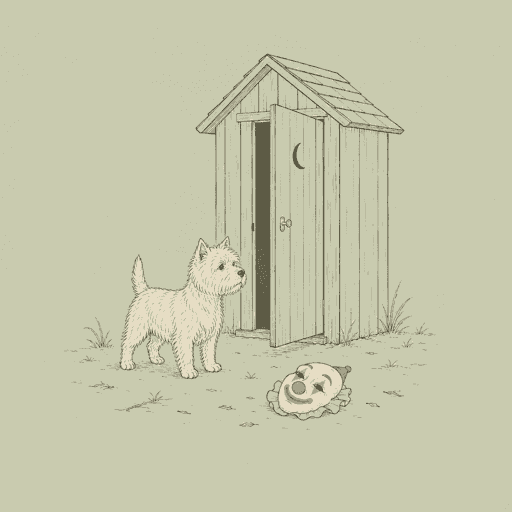
Following a map on her phone, Jane hikes through a secluded part of Hampstead Heath to find the back of the Thornwood property. She slips through a broken wooden fence into a large, unkempt garden. As she circles the house, she discovers a small outhouse with a metal door secured by an open padlock. Inside, she finds a single chair positioned between two metal rings screwed into the walls. Jane takes photos of the room with her phone, then sits in the chair and stretches out her arms, realizing with a gasp that her hands perfectly reach the rings on either side.
Chapter 34 Summary
Horrified by her discovery in the outhouse, Jane is overwhelmed by the memory of the man who brought her to Thornwood years ago and becomes certain that he would have imprisoned her there if she had accepted a drink from him. Her panic is interrupted by the barking of Hugo, the family dog, who has sensed her presence and is running toward her. Jane escapes through the fence just as she hears Stuart calling out to the dog.
Shaken, Jane goes to a pub called the White Swan and orders a gin and tonic. She sends the photos of the outhouse to her son, Dexter, and then calls Oliver, an actor who knew Jessamine in their youth. Oliver describes Jessamine as intense and obsessive. He admits he pursued her off camera, but that after they became intimate, he remembers, “she kind of fell in love with me and […] went a bit bunny boiler on me” (157). He mentions that she had strange scars on her body and that she once told him she was infertile—information that shocks Jane who’s been operating under the assumption that Daisy is Jessamine’s biological daughter.
Chapter 35 Summary
At the White Swan, Jane recognizes the pub’s name from an online forum post she found about a memorial for a woman named Vivienne Rich posted by someone with the username “AnnieB.” She asks the bartender if he remembers the event. While he doesn’t recall the names, he recognizes the photo Jane shows him of young Jessamine, whom he knew as the “lemonade lady” because she drank vodka and lemonades there daily with her Westie dog. He says she stopped visiting years ago after meeting a scruffy, long-haired man, who also frequented the pub. When Jane shows him a family photo including Allen Black, the bartender recognizes Allen as a former resident of the Vale of Health. He mentions a rumor that police had visited Allen’s house during the COVID-19 lockdown as part of a missing person investigation and tells Jane, “That man was dark; dark as all hell. Hated people, you could tell, just hated them. There’s nothing you could tell me about that man that would surprise me. Nothing” (164).
Chapter 36 Summary: “Jasper”
Jasper Black, now a grown man, reflects on his childhood at Thornwood. He initially saw the family’s au pairs as a willing audience for his magic tricks, but as an adolescent, he began to feel aroused by their presence, aware of his father’s sexual encounters with them. He recalls touching himself in front of one au pair, who cried as she watched him. At one point, police came to the house looking for a missing au pair, and the family hid until they left. After this incident, there were no au pairs for a year, a period Jasper remembers as almost normal. He concludes that this quiet time was much better than what followed after Claire Connolly appeared in their garden and, in his words, “destroyed all our lives forever” (166).
Chapter 37 Summary: “Stuart, Nine Years Earlier”
After Stuart has been living at Thornwood for a month, he feels desperate to leave. He receives a text that his room at a local squat is available again, but he struggles to tell Jessamine. After finally informing her, she insists that his life is now with her, that she needs a man around the place, and that the house is now his home. He gently explains that the arrangement was temporary and offers to continuing seeing her while living in his own place, but she is distraught. Two days after Stuart moves out, Annie calls to say Jessamine has been arrested for being drunk and disorderly. He retrieves her from the police station, where she blames him for her relapse. After he helps her recover for a few days, he tries to leave again, but Annie warns him that Jessamine always gets what she wants. He finds Jessamine in her room threatening death by suicide with a knife. Panicked, Stuart promises he will stay to stop her from hurting herself.
Chapter 38 Summary: “Annie”
Annie recalls a sunny afternoon in 2005. Her children, Jessamine and Jasper, were at home, and the family was enjoying a peaceful lunch in the garden. Their quiet was interrupted by a young woman’s voice calling from over the fence about a cat that was stuck in the hedge. Allen went to investigate, and soon the young woman, Claire, entered the garden carrying their freed cat, Bella. Allen invited her to join them for a drink. As Claire sat down, enchanted by the idyllic scene, Annie’s smile became brittle and her voice flat, sensing in the air that her husband was about to resume his predatory pattern and make Claire an au pair girl.
Chapter 39 Summary
In the present, Jane emails Tobias Wilson, a retired security consultant, asking for information about a police visit to Thornwood in 2020. The next morning, Tobias calls with his findings. A 2004 police visit had concerned a missing sex worker named Destiny Trent, who eventually turned up safe. The 2020 visit was a separate matter: part of a cold case investigation into the 2005 disappearance of a young woman named Claire Connolly. The detective on the case, Yasmin Brooks, had retraced Claire’s last known route and noticed a much younger girl in the Thornwood garden who bore a striking resemblance to Claire. Brooks also discovered a neighbor’s statement from 2005 mentioning a woman’s voice saying “Excuse me” near the Blacks’ property on the day Claire vanished. Brooks found a loose fence panel behind Thornwood concealing a package containing guitar accessories Claire had bought earlier that day. This evidence was enough to reopen the case. Brooks interviewed the family again, but they revealed nothing. Annie claimed the metal rings in the outhouse were intended to secure a ride-on lawn mower. Detective Brooks died from ovarian cancer before she could pursue the investigation further.
Chapter 40 Summary
Jane returns to the Vale of Health and asks the Blacks’ young neighbor, George, to describe Daisy. His description of a slim, dark-haired girl contradicts Helen’s account of Daisy as chubby and blond. He shows Jane a photo on his phone of a pretty girl with chin-length dark hair and a nose ring. Jane forwards the photo to Helen Yaxley, the Airbnb owner, who confirms it looks like the girl she knew as Rose White, though with different hair. Jane then visits Daisy’s old school and shows the photo to current students. They recognize Daisy, remembering her as pretty but mysterious and friendless. One student tells Jane about a rumor that Daisy’s parents were brother and sister.
Chapter 41 Summary: “Claire”
On the day of her disappearance, Claire is having a perfect day. Feeling happy and alive, she walks through London to Soho, where she buys guitar strings and a purple plectrum. On her way to meet friends for a drink in Hampstead, she takes a shortcut across the Heath. Near the Vale of Health, she hears a cat crying and discovers it caught in the fence behind a house. Seeing people in the garden, she calls out, “Excuse me?” for help.
Chapter 42 Summary
Jane hosts a party for her stepchildren on her London roof terrace. Surrounded by their families, she feels a deep sense of love and makes a firm decision to sell Rosebery Hall, her burdensome family home, to be more present in her stepchildren’s lives. Her stepson Wilf asks about her investigation into the missing girl. Jane explains her personal connection to the case, mentioning the man who almost kidnapped her years ago and the parallels she sees between her own past and Daisy’s situation. She confesses that she feels if she can save Daisy, she can also save herself. Wilf comforts her, saying she is a “saver of souls” (198) who has already saved all her stepchildren. The next morning, as she returns to Dorset, Jane notices a poster for a circus that was in town the same weekend Daisy arrived. The poster features the face of a clown.
Chapter 43 Summary: “Stuart, Seven Years Earlier”
Two years after moving into Thornwood, Stuart is trapped in a miserable existence. Jessamine’s alcoholism has spiraled, and she is verbally and physically abusive. One night, when Stuart contradicts Jessamine’s cruel advice to Daisy, Jessamine throws her dinner at him. She accuses him of being a pedophile and having an inappropriate interest in Daisy. When he tells her that Daisy’s “just a girl who needs a nice mum and some TLC; needs to be told she’s good and important; needs, Jessamine […] not to end up like you” (207), she attacks him physically with nails, teeth, fists, and feet. Afterward, she declares that Daisy is “nothing to do with me anyway” (207), which sparks Stuart’s interest. Later, Stuart asks Daisy about her father, Harvey, whom she hasn’t seen in two years. Daisy explains that her mother claims Harvey now hates them both. Stuart offers to contact Harvey to find out what happened.
Chapter 44 Summary
Jane suspects the clown on the circus poster might be Daisy’s uncle, Jasper, and that Daisy came to Little Belmont to find him. She discovers the circus website lists three clowns—Raimondo, Patch, and Mikki—but cannot identify which is Jasper beneath the heavy makeup. She drives to the village where the circus is now performing and speaks to a woman at the campsite, asking for Jasper. The woman confirms that Jasper worked with them but reveals that he disappeared over a week ago, and no one knows his whereabouts.
Chapter 45 Summary: “Stuart, Seven Years Earlier”
Stuart calls the business number for Harvey and speaks to his son, Jason. Jason is hostile, calling Jessamine a “total nut” and stating that a DNA test two years prior proved conclusively that Harvey is not Daisy’s biological father. He explains that Jessamine had blackmailed Harvey for years and the family felt nothing but relief when they finally confirmed she was lying. Stuart confronts Jessamine with this information. After an intense argument where Stuart threatens to leave with Daisy, Jessamine admits she does not know who Daisy’s biological father is. She then threatens to kill Stuart in his sleep if he ever tells Daisy the truth.
Chapter 46 Summary
The following morning, Stuart approaches Annie in her study, hoping she can shed some light on Daisy’s parentage. When he explains that Harvey is not Daisy’s father and Jessamine claims not to know the truth, Annie feigns ignorance and insists it is none of her business. Pressed further about her granddaughter’s well-being, Annie coldly states that she has “more important things to worry about than that child” (223). Frustrated and disgusted, Stuart tells Annie that her entire family is living in a “dumpster fire.” As he leaves, he notices her hand is shaking.
Chapter 47 Summary: “Claire”
Claire wakes up groggy and disoriented in a bedroom at Thornwood. It is now evening. Annie is with her and claims Claire had a “funny turn” and passed out, and that they suspected she may have taken drugs—an explanation Claire internally rejects, as she had not taken any that day. Claire’s memory is blurry, and she feels a growing sense of dread. As she insists on leaving, Allen enters the room with Jasper, who is now dressed in a clown costume with a painted face. At his father’s command, Jasper begins to perform a magic trick for Claire while his parents watch, his father looking on, “entranced.”
Chapters 33-47 Analysis
Jane’s discovery of the outhouse at Thornwood in a neglected corner of a secluded property points to the novel’s thematic emphasis on The Dangers of Isolation by underscoring the ways such an environment enables monstrous acts to occur unseen. Jane’s visceral reaction to it—sitting in the solitary chair and finding her arms “reach perfectly, on each side, to the metal rings” (154)—transforms the novel’s atmosphere of suspense into one of confirmed horror. This scene establishes the motif of locked rooms and the outhouse, a literal, physical space of imprisonment, as a metaphor for the family’s hidden secrets. The room’s grim functionality provides a modern, suburban equivalent to the hidden attic in Jane Eyre, a key literary antecedent for the novel’s Gothic framework. This restraints on the chair validate Jane’s suspicions of a potential crime and personalizes the threat, as she imagines her narrow escape from this family and this house.
Juxtaposed flashbacks narrated by Annie, Claire, and Stuart reveal the decay of the Black family’s public image, exposing The Illusion of Middle-Class Respectability. In her memory of the day Claire arrived, Annie recalls a scene of idyllic domesticity: A “table laid with a French linen cloth,” (178) her “two lovely teenagers,” and her “handsome husband” (178) enjoying a peaceful lunch. This carefully curated image of affluence and contentment is immediately undermined by Annie’s internal awareness of Allen’s predatory nature, revealing the respectable facade was always a cover for deep dysfunction. This memory of a perfect summer afternoon contrasts sharply with the grim reality of the household in Stuart’s flashbacks. His narrative depicts a home dominated by Jessamine’s violent alcoholism, violent physical abuse, and coercive control. Stuart’s blunt assessment to Annie that the family is living in a “dumpster fire” (223) is a direct indictment of their pretense, collapsing the carefully constructed illusion and exposing the rot that has consumed them from within.
The dysfunctional relationships across generations of the Black family illustrate The Inherited Nature of Trauma. Jessamine’s violent and erratic behavior is contextualized by Oliver’s memory of the “strange marks” (158) on her body and his suspicion that she herself was abused. Her own abusive actions—both the physical assault on Stuart and her emotional cruelty toward Daisy—suggest a learned pattern of behavior modeled by Allen, alluded to in Annie, Claire and Jasper’s chapters. Jessamine’s declaration that Daisy is “nothing to do with me anyway” (207), coupled with Annie’s cold dismissal of her granddaughter (“I have more important things to worry about than that child” (223)), emphasize an inherent lack of maternal care passed down from one generation to the next. This cycle of abuse and neglect has left Daisy deeply isolated. Jessamine’s statement coupled with the rumors about Daisy’s parentage from the classmate Jane interviews lay the groundwork for the reveal of Daisy’s true identity. Stuart’s discovery that Harvey is not Daisy’s biological father and that Jessamine has no idea who is, emphasizes the extent to which Daisy’s understanding of herself is built on a foundation of lies designed to conceal the family’s history of trauma and abuse.
The narrative incorporates clown imagery as a central motif, evoking a classic horror trope. In a flashback to her imprisonment at Thornwood, a drugged and disoriented Claire is forced to watch Jasper, dressed in a full clown costume, perform a magic trick for her. This scene underscores the novel’s thematic connection between performance and abuse. This imagery recurs in the present day when Jane discovers the circus poster featuring a clown, linking Jasper’s career as a clown to his childhood confession that as a boy he would “switch into another persona” (165) to distance himself from his own disturbing impulses and behavior.
Jane’s personal motivations for the investigation position her quest to find Daisy as a mission for self-redemption. At her rooftop party, Jane confesses to her stepson Wilf that her drive to find Daisy is tied to her own past, explaining, “maybe if I could save her, I could possibly, you know, save myself” (197). The concrete link between Daisy’s disappearance and the memory of the man who nearly kidnapped her, suggests Jane, as parallel victim who narrowly escaped the same fate, is capable of understanding the threat in a way others cannot. This deeply personal stake separates her from the more objective police detectives, like Detective Brooks, who have pursued answers in Claire’s case. Wilf’s affirmation that “if anyone can save a lost soul, Jane Trevally, it’s you. After all […] you saved all of us” (198), validates her mission, casting it as a noble act of intervention. Jane’s subsequent decision to sell Rosebery Hall, her own family home filled with traumatic memories, symbolizes her attempt to break free from her own past by actively working to save another from a similar fate.

Get in-depth, chapter-by-chapter summaries and analysis from our literary experts.
- Grasp challenging concepts with clear, comprehensive explanations
- Revisit key plot points and ideas without rereading the book
- Share impressive insights in classes and book clubs
Related Titles
By Lisa Jewell










Featured Collections
Class
View Collection
Class
View Collection
Community
View Collection
Daughters & Sons
View Collection
Family
View Collection
Fathers
View Collection
Fear
View Collection
Good & Evil
View Collection
Mothers
View Collection
Safety & Danger
View Collection
Truth & Lies
View Collection