It Could Have Been Her
A modern alternative to SparkNotes and CliffsNotes, SuperSummary offers high-quality Study Guides with detailed chapter summaries and analysis of major themes, characters, and more.
Summaries & Analyses
Quizzes
NEWReading Tools
Important Quotes
Content Warning: This section of the guide includes discussion of addiction, substance use, sexual violence and harassment, rape, child abuse, physical abuse, emotional abuse, mental illness, death by suicide, animal death, graphic violence, and cursing.
“I saw Daddy throw Mummy a look. Even though I was only a kid, I knew what that look meant.”
(Prologue, Page 2)
Jewell utilizes the child narrator’s perspective and voice for the novel’s Prologue to immediately establish a tension between the innocence of childhood and the moral depravity of the Black parents. The child’s intuitive understanding of his parents’ nonverbal communication signals a hidden, predatory dynamic. The perspective introduces a sinister undertone despite the family’s welcoming façade, hinting at the novel’s thematic interest in The Illusion of Middle-Class Respectability.
“[L]ets the nice girl believe that she really, really does intend to sell this place, that she really is quite, quite normal thank you very much, every bit as normal and as lovely as she looks, a normal woman selling a scruffy house that is no longer what she wants or needs, when all the while she is silently screaming, Leave, now, please please leave.”
(Chapter 1, Page 4)
This passage reveals Jane’s deep internal conflict regarding her ancestral home, a physical manifestation of her family’s tragic legacy. The repetition of “please” and “leave” point to a desperate, silent panic. The house represents her painful past, and selling it feels like an existential threat, indicating she’s not yet ready to excavate her past trauma.
“[S]he remembers vividly the strange sensation of leaving the heart of loud, high-octane Friday-night London, full of vodka and recreational drugs, and finding herself twenty minutes later in a sleepy Dickensian hamlet formed of tiny lamplit alleyways and rows of mismatched houses, seemingly cut off from the rest of the world.”
(Chapter 2, Page 12)
Jane’s recollection of her first journey to Thornwood establishes the Vale of Health’s deep seclusion, pointing to the novel’s thematic focus on The Dangers of Isolation. The stark contrast between London’s vivid chaos and the hamlet’s eerie, “cut off” quietness creates a sense of foreboding. This physical isolation is a metaphor for the moral and psychological isolation that allows corruption to fester within the house.
“She drinks here instead of at home because then she’s not drinking alone. She’s drinking with other people who are drinking. The other people drinking here are not like her and she knows it, but still, it makes her feel more normal. Less like she has a problem.”
(Chapter 5, Page 23)
Stuart’s observation reveals the complex psychology behind Jessamine’s addiction and her attempts to maintain normalcy. By drinking in public, she creates a fragile illusion of social drinking, which helps her deny the severity of her problem. This act highlights the theme of maintaining respectable facades while grappling with deep-seated dysfunction and isolation.
“I wanted to see only contentment and relaxation when I came home from work. Tidy shelves and clean hands and happy people.”
(Chapter 14, Page 63)
Allen’s narrative point-of-view distills his pathology to an obsession with a fantasy of order, control, and entitlement. His vision of domestic bliss places the emphasis on aesthetic perfection rather than love or connection.
“‘How dare you?’ Mummy said to Sandra. ‘How dare you mutilate my child?’”
(Chapter 17, Page 77)
Annie violent reaction to a harmless prank reveals the family’s deep-seated dysfunction and her underlying resentment about Allen’s violent sexual patterns. This moment establishes the atmosphere of irrational fear and sudden violence that defines the household, foreshadowing later revelations of abuse.
“Adrenaline courses through Jane’s veins as all these tiny cogs and wheels start to slot into place and things feel as if they are moving again.”
(Chapter 18, Page 81)
“I knew she was wrong; I knew we, the two of us, were wrong; the union we made of ourselves and our addictions and our brokenness was wrong. But it felt so incredibly good.”
(Chapter 19, Page 83)
Stuart’s reflection reveals a core conflict: The awareness of mutual dysfunction versus an irresistible attraction. This quote establishes his bond with Jessamine as one founded on shared addiction, foreshadowing the inevitable destructive consequences of their union and illustrating Stuart’s attraction to what he perceives as flawed.
“My mum didn’t like her. I think she thought she was too fun. We played a joke on Mummy, pretended I’d had my ears pierced. She didn’t like it. Daddy drove Sandra away the same day. So yeah, you need to be not fun.”
(Chapter 22, Page 99)
Jessamine’s stark warning to Naomi reveals the oppressive emotional landscape of her home. Her advice to be “not fun” underscores Jessamine’s childhood instinct to develop coping mechanisms to deal with Allen and Annie’s abuse. This brief exchange encapsulates the rigid control and lack of warmth that define her upbringing and shape her perception of relationships.
“But one thing I do know is that that house is not somewhere I’d want to spend any time, and those people are not people I’d want as friends.”
(Chapter 24, Page 114)
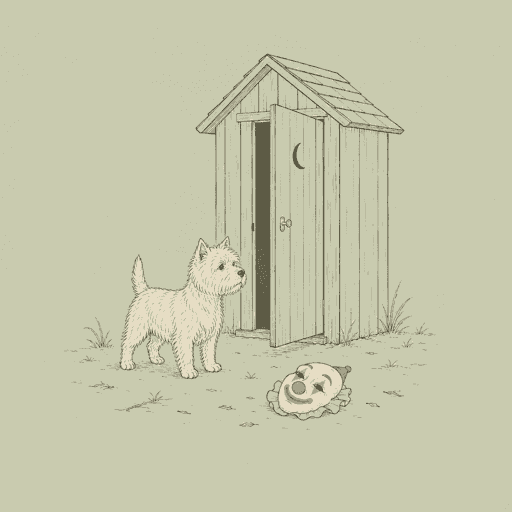
“She stretches out her arms, and gasps when she sees that they reach perfectly, on each side, to the metal rings.”
(Chapter 33, Page 154)
Jane’s discovery of the outhouse acts as a turning point in her investigation. The imagery of the shackles indicates that Allen was keeping the sex workers captive in the house. Jane’s simple action of measuring her arm span reinforces her narrow escape from the other girls’ fate.
“That man was dark; dark as all hell. Hated people, you could tell, just hated them. There’s nothing you could tell me about that man that would surprise me. Nothing.”
(Chapter 35, Page 163)
Jewell uses Jane’s interviews as a device to reveal outside perspectives on the Black family. Here, the pub manager’s assessment establishes Allen’s sinister nature despite his attempt to maintain a façade of respectability.
“The au pair girls were not really human beings as far as I was concerned. When I was young, I saw them as props, actors, people to practice my magic tricks on, my mimes, my persona.”
(Chapter 36, Page 165)
Jasper’s narration provides direct insight into the psychological consequences of growing up in Thornwood. His inability to see the victims as human demonstrates how abuse normalizes cruelty, a core element of The Inherited Nature of Trauma.
“What actually happened was that Claire Connolly walked into our garden one sunny June afternoon and destroyed all our lives forever.”
(Chapter 36, Page 166)
Jasper’s narration demonstrates the deep impact of his traumatic upbringing on his perception of reality. By blaming Claire for the family’s ruin, the text highlights how victims of abuse can internalize and distort blame. Jewell’s description of the “sunny June afternoon” provides a tonal contrast to the horror that befell Claire inside the house.
“‘Well, if anyone can save a lost soul, Jane Trevally, it’s you. After all’—he gestures around the roof terrace at her many stepchildren—‘you saved all of us.’”
(Chapter 42, Page 198)
Wilf’s assessment of Jane points to her core motivation for the investigation—a deeply personal quest for self-redemption. Wilf’s words validate her past role as a protector for her stepchildren and suggest that by saving Daisy, Jane can retroactively heal her own childhood trauma, making the mystery a psychological journey.
“I promise you, by the next time I see you, I will be out of that mess. I swear. I just need to get Daisy out of that house. Make sure she’s safe.”
(Chapter 50, Page 244)
Stuart’s declaration to his daughter highlights his role as a protector caught in the Black family’s destructive cycle. His desire to protect Daisy positions his empathy and care in contrast to Jessamine neglect and cruelty. However, his willingness to stay leaves him trapped in a cycle of abuse.
“But it is all an illusion, smoke and mirrors, sleight of hand, like the tricks that I perform when I am being Patch the Clown. Because however quiet and peaceful we all are, however much we all laugh at Catherine Tate, all of us know, each and every one of us in this blighted, terrible house, that he could kill us in a flash.”
(Chapter 51, Page 246)
Jasper’s narration exposes the family’s performance of normalcy as a fragile veneer. He likens his father’s deception to a clown’s “sleight of hand,” showing the constant, underlying threat of violence beneath the surface of their domestic life. This passage reveals the deep psychological impact of living in perpetual fear, despite outward appearances.
“It had been sent care of you.”
(Chapter 52, Page 248)
Jane’s statement to Stella confirms that a clue found in Jasper’s trailer is legitimate, propelling the narrative forward. The detail that mail was sent “care of” Stella highlights Jasper’s transient and isolated existence after leaving Thornwood. This minor detail provides the breakthrough Jane needs to uncover his history of mental illness and his connection to other crimes.
“Stuart, get away from the door and get back into bed, right now, or I’ll cut off your other fucking ear. OK?”
(Chapter 53, Page 254)
Jessamine’s threat highlights the normalization of violence within the Black family. The line is delivered after she has already maimed Stuart, reinforcing his complete vulnerability and her capacity for brutality. This moment illustrates how the isolation of Thornwood enables abuse, continuing the pattern of imprisonment and control established by her parents.
“He dreamed about his home every night of his life. Dreamed that he was back there, trapped.”
(Chapter 58, Page 280)
This disclosure from Jasper’s therapist provides critical insight into his psyche, revealing that Jasper is psychologically trapped by his past. The description of his recurring dreams transforms Thornwood from a physical location into a symbol of inescapable trauma. It suggests his violatory actions as an adult are a direct manifestation of the horror he endured and witnessed.
“It wasn’t a pair of strappy shoes. It was a pair of metal leg restraints.”
(Chapter 62, Page 302)
The reveal of the leg restraints provides a turning point in Stuart’s understanding of the Black family’s history. The narrative builds suspense by first suggesting an ordinary object (“strappy shoes”) before delivering the reveal that they are shackles. This discovery confirms that the au pair girls were prisoners, forming a visual link to the restraints Jane found in the outhouse.
“Jessamine never touched me; she never told me she loved me. Nobody told me they loved me until Stuart came.”
(Chapter 69, Page 327)
Daisy’s narrative POV contrasts the neglect and abuse she suffers from Jessamine and Annie to the care and love Stuart shows her, positioning Daisy as a proxy for Stuart’s own daughter. The simple, declarative sentences convey an emotional deprivation that contrasts sharply with the maternal ideal.
“‘This house,’ she says, her jaundiced eyes trailing around the four walls of the room, ‘is a house of fucking horrors.’”
(Chapter 73, Page 348)
“Trauma can tie you down, hold you in one position. You think you’ve moved, you think you’re somewhere else, but you’re not; you’re still there, pinned down in every single moment of it, and it’s easier, somehow, to stay close to the scenes of those moments, not to tug too hard at the pins, to surrender, not struggle—and I can’t explain it any better than that.”
(Chapter 76, Page 358)
Jane uses the metaphor of being “pinned down” to explain the paralyzing effects of trauma. This insight clarifies why Jessamine remained in a toxic environment, framing her inaction as a coping mechanism. It highlights how trauma can emotionally and physically tether individuals to the source of their pain.
“The look on her face turns then from indignation to fury and her voice is ice-cold when she says, ‘She killed Daddy. She deserved it!’”
(Epilogue, Page 368)
In the novel’s epilogue, Jewell invokes Jasper’s perspective to create a twist ending that hinges on a final reveal. His memory of Jessamine’s justification for murdering Claire confirms her as an active perpetrator continuing her family’s legacy of violence. Jasper’s memory solidifies her role as a killer, motivated by a warped sense of justice.

Unlock every key quote and its meaning
Get 25 quotes with page numbers and clear analysis to help you reference, write, and discuss with confidence.
- Cite quotes accurately with exact page numbers
- Understand what each quote really means
- Strengthen your analysis in essays or discussions
Related Titles
By Lisa Jewell










Featured Collections
Class
View Collection
Class
View Collection
Community
View Collection
Daughters & Sons
View Collection
Family
View Collection
Fathers
View Collection
Fear
View Collection
Good & Evil
View Collection
Mothers
View Collection
Safety & Danger
View Collection
Truth & Lies
View Collection