It Could Have Been Her
A modern alternative to SparkNotes and CliffsNotes, SuperSummary offers high-quality Study Guides with detailed chapter summaries and analysis of major themes, characters, and more.
Summaries & Analyses
Quizzes
NEWReading Tools
Chapters 17-32Chapter Summaries & Analyses
Content Warning: This section of the guide includes discussion of addiction, substance use, sexual violence and harassment, rape, child abuse, physical abuse, emotional abuse, mental illness, animal death, graphic violence, and cursing.
Chapter 17 Summary: “Jessamine”
In a flashback to the year 2000, Jessamine recalls that a few weeks after her grandmother died, her father arranged for an au pair named Sandra to come and stay. While Jessamine’s mother is immediately hostile to Sandra, Jessamine soon grows to admire her modern, relaxed nature, which contrasts sharply with her own private and old-fashioned parents.
Inspired by Sandra, Jessamine begins to adopt a new style. As a prank, she uses clip-on earrings to pretend Sandra took her to get her ears pierced. Enraged by this, Annie slaps Sandra twice across the face, causing her nose to bleed and accusing her of mutilating her child. Her mother demands that her husband remove Sandra from the house immediately, and he complies, driving Sandra away. Two days later, a new au pair arrives. This woman is housed in the attic and is strictly forbidden from smiling or speaking to the children.
Chapter 18 Summary
Jane returns to Thornwood to question Stuart. He’s annoyed by her presence, but his dog, Hugo, greets her warmly. Jane tells him she found a hoodie from a local school in the woods near her home, strengthening the connection between the missing dog, the missing girl, and North London. Tucker dismisses her, insisting a random girl must’ve stole his dog. When Jane asks if his stepdaughter’s initials are “DB,” Tucker becomes visibly uncomfortable, grabs Hugo, and orders Jane not to come back.
Later, Jane researches the address and finds an online petition signed by Stuart and a woman named Jessamine Black. Realizing Jessamine might be the stepdaughter’s mother, Jane searches her name and finds an IMDb page for a 2006 film called The Bedsitter in which Jessamine was an actress. She recognizes the costume designer, Natasha de Large, as a dog trainer she once knew. Jane contacts Natasha on Instagram, asking if she worked on the film and would be willing to discuss it.
Chapter 19 Summary: “Stuart, Nine Years Earlier”
After their sexual encounter, Stuart is infatuated with Jessamine. After being forced out of the squat where he lives, Stuart finds himself homeless and goes to Jessamine’s house. She is initially angry at him for not contacting her after they slept together, but he explains he was giving her space.
They drink wine and sleep together again. Afterward, Jessamine confesses her deep loneliness and her belief that a partner makes one’s life complete. When Stuart gently asks about her drinking habits, she becomes defensive. As he prepares to leave, she invites him to stay, knowing he has nowhere else to go. She insists he must remain her “little secret” and hide from her mother and daughter. Despite his reservations about the situation, Stuart agrees.
Chapter 20 Summary
Feeling restless at Tony’s house in London, Jane dines alone at a French restaurant, researching the cast of The Bedsitter. She receives a reply from Natasha, who confirms she was the film’s costume designer and invites Jane to her home in Chiswick the next morning to talk about Jessamine and watch the movie.
The message reminds Jane of her own past life with her ex-husband, Tony, and their stepchildren. Feeling a pang of loneliness, she posts a message in a WhatsApp group called “The Kiddies” and invites them all for a get-together. She is heartened when her stepson, Dexter, immediately accepts.
Chapter 21 Summary
Jane meets Natasha at her home in Chiswick. Natasha recalls being friends with Jessamine for a time after they made the film. She describes the younger Jessamine as “highly strung,” dramatic, and desperate to get married and have children. Natasha lost contact with her after moving away.
Natasha plays the film, The Bedsitter, for Jane. Onscreen, Jane sees a young Jessamine with mousy hair and wide-set green eyes, whom she finds quietly beautiful. Natasha comments that while Jessamine wasn’t necessarily a nice person, she possessed a magnetic quality that drew people to her. Jane studies the image, captivated by the sense of an “untold story lurking behind her eyes” (98).
Chapter 22 Summary: “Naomi”
Annie and Allen’s new au pair, Naomi, settles into the attic room at Thornwood. Jessamine, now 12 or 13 years old, visits her, though she is not meant to be there. She warns Naomi that the previous au pair, Sandra, was fired for being “too fun” and advises her to be serious, to ignore her weird brother who thinks he’s a clown, and to avoid her mother. Jessamine also reveals that she is forbidden from speaking with Naomi. Allen appears at the door mid-visit, interrupting them.
Naomi believes her duties will be “light housework and childcare” (102), leaving her time to continue her education at the library. When Allen appears, he dismisses her understanding of an au pair’s duties, assigning her heavy cleaning tasks and making it clear her role will be more intensive than she thought.
Chapter 23 Summary: “Stuart, Nine Years Earlier”
Stuart wakes up in bed with Jessamine when her young daughter, Daisy, enters the room calling for her mother. Jessamine tries to hide the fact that Stuart is there, but Daisy discovers him. Jessamine is dismissive of her daughter’s inability to sleep and sends her back to her room. The next morning, Stuart meets Jessamine’s mother, Annie, who reacts to his overnight stay with unconcealed disgust and distaste. Jessamine declares pointedly that her married lover, Harvey, is away in Istanbul with his wife. Stuart observes Jessamine subserviently preparing coffee for Annie, a dynamic he questions but which Jessamine brushes off as normal. The tense and strange atmosphere in the house makes Stuart feel a compulsion to stay, sensing that he needs to figure out what is wrong.
Chapter 24 Summary
Jane is thrilled when her stepson, Dexter, messages her offering to help with her investigation. She briefs him at the house, explaining she feels she has reached a dead end. Dexter suggests they canvass the neighbors near Stuart Tucker’s home. They decide Dexter will pretend to be an old school friend of the missing girl. At the third house they try, a teenage boy named George immediately recognizes their description and confirms the girl’s name is Daisy Black. George, who went to primary school with Daisy, says he has not seen her since the first COVID-19 lockdown. He reveals that Daisy’s mother, Jessamine, was rarely present and that her stepfather, Stuart, was her primary caregiver, adding that he believed the two were close. George also recalls a long police visit to Daisy’s house during lockdown, noting that Daisy seemed different afterward. His father describes the family as strange and concludes that Daisy was right to get away from that house.
Chapter 25 Summary: “Annie”
Annie recounts meeting her husband, Allen, when she was 13 and marrying him at 19. They moved into her family home, Thornwood, where Allen proved to be very handy. Annie trained as a nurse, and they had two children, Jessamine and Jasper. Annie admits her children were difficult, and she was happy to let her own mother raise them so she could remain focused on Allen. She knew he was controlling but claims she enjoyed being controlled by him because it made her feel loved. Everything changed in 2000 when Annie’s mother died. Allen insisted they hire au pairs and refused to allow Annie to clean the house or cook a meal. Though she did not want the au pairs, Annie went along with it, partly because she no longer wanted to have sex with Allen or wash his clothes. She says that this arrangement made sense at the time, but by the time it didn’t, it was too late to change things.
Chapter 26 Summary: “Stuart, Nine Years Earlier”
Stuart stays with Jessamine Annie, and Daisy through the Christmas holidays. He learns from Daisy that Jessamine’s older lover is Harvey Moor, whom Stuart googles and discovers he is a married founder of a clothing company with two other sons. While walking Daisy to school, Stuart reveals that his parents left him £1 million and he lives off the interest, intending to leave the money to his children when he dies. Later, Jessamine confronts Stuart, telling him he cannot simply move in, but she worries about him having nowhere else to stay. She changes her mind and formally invites him to stay indefinitely. She explains that she and her mother need a man in the house to be useful and protective, much like her late father was. She makes Stuart promise he will not make her regret the decision.
Chapter 27 Summary
A neighbor named Spencer directs Jane and Dexter to another resident who knew Daisy, a woman also named Jane. Dexter uses his school reunion story to get information from this “Other Jane,” who reveals many details about Daisy’s strange home life. She confirms a man named Stuart is now Daisy’s carer, that the mother is rarely seen, and that the family once included an unpleasant grandfather (whom the grandmother threw out) and a series of young au pairs who never stayed long. She also confirms there was a significant police presence at the house during the COVID-19 lockdown, though she doesn’t know why. She recalls two strange things Daisy told her as a child: that a ghost who hated little girls lived in their attic, and that her uncle, Jasper, had run away with the circus. After leaving, Jane and Dexter decide their next steps are to find Jasper and investigate the police incident. When an initial search proves fruitless, Dexter suggests it is time to use his father’s professional resources.
Chapter 28 Summary: “Stuart, Nine Years Earlier”
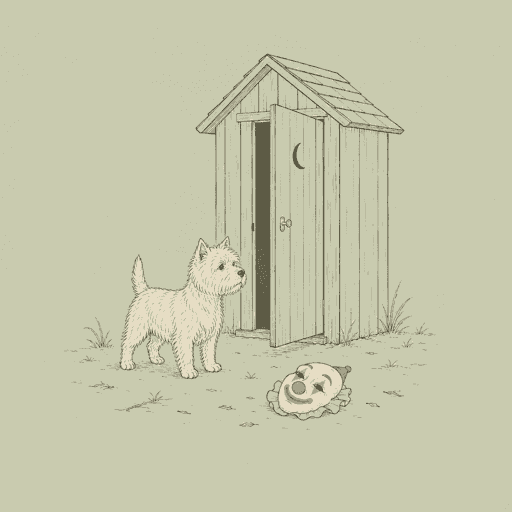
Stuart regularly cooks dinner for Jessamine, Annie, and Daisy—none of whom know how to cook or show any desire to learn. He senses that Annie dislikes him. To earn his keep, he agrees to dispose of a cat that has been dead in her shed for over a year. When Annie forbids him from burying it in the garden, Stuart buries the cat on the Heath instead. While getting tools from Annie, Stuart glimpses unsettling items in a sideboard drawer: a plastic clown mask, white leather gloves, and a pair of handcuffs that he realizes on closer inspection are plastic toys. The house’s atmosphere is tense. Jessamine struggles with alcohol withdrawal and Stuart attempts to manage it. Disturbed by the strange objects and the presence of several locked doors in the house—including Annie’s study where she isolates herself—Stuart feels something is horribly wrong. He becomes even more determined to uncover the family’s dark secret.
Chapter 29 Summary: “Annie”
Annie finds the new au pair, Naomi, problematic. She believes that unlike her predecessor, Naomi has an inflated sense of self-worth and constantly bickers with Allen, particularly about money. Annie perceives their home life as tenuous and feels the rising tension. Naomi is gone within a month. Two weeks later, Allen brings home another woman, Jane. Annie is immediately unsettled by Jane, who is a divorcée and feels too similar to herself, unlike the previous women. She watches Allen mix a drink for Jane and knows what he is planning, viewing it as a terrible mistake. When Jessamine tumbles out of bed upstairs, distracting Allen, Jane knocks the drink from Allen’s hand. Annie prevents Allen from forcing Jane to stay and watches her flee into the night, hoping she will be the last girl Allen brings home.
Chapter 30 Summary
After leaving Dexter, Jane receives a message from her house-sitter, Shannon, detailing new problems with her decaying house, compounding her financial worries. Continuing her investigation at Tony’s home, Jane watches the movie clip of Jessamine again and contacts another actor from the film, Oliver Bloom, to ask if he remembers anything about Jessamine. Feeling a growing connection to the case, she pays for official reports on Jessamine and the Thornwood house from the Land Registry.
The next morning, Jane receives a message from Helen, who has found an old photograph in the missing girl’s suitcase. Jane is shocked to see it features the same man she went home with from a bar years ago, sitting on the same sofa from that night. In the photo, he is flanked by a teenage Jessamine and a boy wearing white gloves and holding a clown’s head. Jane also recognizes the reflection of the man’s wife—the woman who helped her escape—taking the picture. The back of the photo bears the inscription: “The Last One of Us, Thornwood: 30th April 2005” (120). The discovery solidifies Jane’s obsession, shifting her focus from the missing girl to uncovering the history of the Black family and their house.
Chapter 31 Summary
At Tony’s house, Jane receives the Land Registry report for Thornwood and learns its previous owner was Vivienne Rich. An internet search reveals a message board post from 2000 by “AnnieB” announcing Vivienne’s death. Feeling the need to organize the facts, Jane buys supplies and creates a timeline. While reviewing the property’s title plan, she discovers its large grounds connect to the Heath, offering a potential way to access it without alerting Stuart Tucker. Just as she prepares to leave, she gets an email from Oliver Bloom, an actor who worked with Jessamine. He reveals they had a brief affair and has information to share, asking her to call him later. Jane sets a reminder and heads out to investigate the Thornwood property from its rear access point.
Chapter 32 Summary: “Stuart, Nine Years Earlier”
Stuart asks Jessamine about the clown mask he found in Annie’s drawer, and she reveals she has a brother, Jasper, who disappeared years ago. She describes him as having a strange circus obsession and a clown alter-ego. Later, while Daisy, to school, Stuart learns that the family never discusses Jasper or Daisy’s grandfather, Allen. Daisy expresses a belief that her mother wouldn’t care much if she were gone, speculating that Jessamine had a difficult childhood.
While Jessamine is ill in bed, Stuart searches the house and finds a photo album. It contains pictures of a stern-looking Allen and of a teenage Jessamine and Jasper, who both look drawn with dark circles under their eyes. There is what looks like bruising to the side of Jessamine’s face. As the photos progress, Jasper appears more unhinged. Stuart is shocked to find a photo of Allen holding the cat he found dead in the shed. An inscription reveals the cat’s name was Bella, and she was a family pet, leading Stuart to question how long she had been dead in the shed and what the family knew.
Chapters 17-32 Analysis
The novel contrasts Annie Black, the matriarch of Thornwood, with Sandra, the au pair, emphasizing the isolated nature of the Black children’s upbringing. Spending time with Sandra shifts Jessamine’s sheltered view of the world:
[W]ith Sandra around, I started to see the world differently. It wasn’t bad, I realized, to wear cheap clothes. It wasn’t bad to leave the ends off your words or not brush your hair three times a day or have bare feet indoors. It wasn’t bad to have a loud laugh, or fillings, or to bite your nails. None of these things made you a bad person (76).
Annie’s violent reaction to Jessamine’s joke that Sandra let her pierce her ears shatters The Illusion of Middle-Class Respectability cultivated by Annie and Allen. Jewell positions the family’s private, old-fashioned, and affluent lifestyle in Hampstead as a carefully maintained façade—a performance of propriety that masks a volatile and controlling domestic reality. The neighbors’ descriptions of the Blacks—“That family […] was always a little stranger. There were…rumors” (114), emphasizes their insularity, enabled by Thornwood’s location in the secluded Vale of Health, which prevented outside scrutiny. The family’s isolation allows them to curate their public image while concealing the violence and dysfunction within.
The narrative contrasts Allen’s controlling presence with Stuart’s gentle, nurturing masculinity. Jessamine’s explicit declaration that she and her mother “need something… a man in the house again” (122) reveals a deep-seated belief in patriarchal protection that complicates the family’s power dynamics. The memory of Allen, the handy and “alpha” patriarch, sets a standard of male utility that Jessamine seeks to replicate by inviting Stuart to stay. However, where Allen’s control bred fear, Stuart offers care: He cooks nutritious meals for the family, compassionately buries their long-dead cat, and offers Daisy the emotional attention her mother cannot. Stuart’s unconventional life—living off an inheritance rather than working—further subverts the traditional provider role Allen represented. His function as an empathetic outsider and protector disrupts the legacy of toxic masculinity left by Allen and continued by Jessamine’s predatory older lover, Harvey Moor. Stuart’s presence challenges the family’s skewed understanding of male authority, pointing to care rooted in kindness rather than a need for dominance and control.
Stuart’s discovery of a photo album containing images of a teenage Jessamine with what appears to be a bruised face provides tangible evidence of a long history of suffering. The photograph of the siblings looking “drawn,” with dark circles under their eyes, shifts Stuart’s perspective on Jessamine’s adult struggles from personal failings to the direct outcome of past abuse. Daisy’s astute observation that her mother must have had “a bit of a weird childhood” (150) highlights The Inherited Nature of Trauma. The Black family’s dysfunction and neglect manifests in each generation: Annie’s narrative reveals her obsession with Allen led her to abdicate maternal duties, passing her children to her own mother and perpetuating a cycle of neglect. This cycle is reflected in Daisy’s belief that her own mother’s “life would go on just the same without me in it” (149). The narrative structure, which interweaves these past revelations with the present-day investigation, emphasizes that trauma as an active, destructive force that impacts each successive generation.
The setting of Thornwood is a space where secrets are kept under lock and key and left to fester, emphasizing The Dangers of Isolation. Jewell positions the house itself as a Gothic space through Daisy’s story of a ghost in the attic—where the family’s au pairs were housed. The unsettling objects Stuart finds in the house, particularly the plastic clown mask and toy handcuffs in a sideboard drawer, function as symbols of the family’s concealed horrors. The motif of clowns and clown masks takes an emblem of childhood innocence and turns it into a mask for a monstrous, hidden identity—a performance of normalcy that conceals dangerous secrets. This idea of concealment is reinforced by the recurring motif of locked rooms, especially Annie’s study, which is a literal and metaphorical representation of the family’s secrets and emotional repression.
The narrative structure uses the parallel investigations of two outsiders, Stuart in the past and Jane in the present, to reconstruct the fragmented and suppressed history of the Black family. Stuart feels a compulsion to stay at Thornwood, sensing there are “fissures and scars in this house, something misaligned, something horribly, brutally broken” (133) that he is determined to uncover. Nine years later, Jane’s obsession similarly shifts from the immediate mystery of Daisy’s disappearance to the entire dark history of Thornwood, a change catalyzed by her discovery of the photograph of Allen. Both characters function as detectives, piecing together clues that the traumatized and complicit family members cannot or will not reveal. While the flashbacks from Annie and Jessamine offer important internal perspectives, their narratives are inherently unreliable due to their trauma and complicity. The multiple timelines and shifting perspectives create a narrative mosaic, forcing the reader to assemble disparate accounts. This structural choice highlights how deep-seated family secrets can only be brought to light by the intervention of an external, objective gaze.

Get in-depth, chapter-by-chapter summaries and analysis from our literary experts.
- Grasp challenging concepts with clear, comprehensive explanations
- Revisit key plot points and ideas without rereading the book
- Share impressive insights in classes and book clubs
Related Titles
By Lisa Jewell











Featured Collections
Class
View Collection
Class
View Collection
Community
View Collection
Daughters & Sons
View Collection
Family
View Collection
Fathers
View Collection
Fear
View Collection
Good & Evil
View Collection
Mothers
View Collection
Safety & Danger
View Collection
Truth & Lies
View Collection