It Could Have Been Her
A modern alternative to SparkNotes and CliffsNotes, SuperSummary offers high-quality Study Guides with detailed chapter summaries and analysis of major themes, characters, and more.
Summaries & Analyses
Quizzes
NEWReading Tools
Prologue-Chapter 16Chapter Summaries & Analyses
Content Warning: This section of the guide includes discussion of addiction, substance use, sexual violence and harassment, rape, child abuse, physical abuse, emotional abuse, mental illness, graphic violence, and cursing.
Prologue Summary
On June 4, 2005, a child narrator describes a visit from a friendly young woman who smiles a lot. The visitor, a recent music technology graduate named Claire, is curious about the family’s house and its history. The narrator’s father is charming, but their mother is rude, and their older sister just stares. The narrator, who’s wearing a clown-themed T-shirt with a water-squirting flower, watches Claire and feels sexually aroused—a new sensation for him. Feeling awkward, he avoids looking at Claire directly.
When Claire prepares to leave to meet friends, the narrator’s father offers her cheesecake to convince her to stay. The narrator’s mother confirms it is strawberry. Joking that her friends call her “No-show Claire,” the visitor agrees to stay.
Chapter 1 Summary
On May 8, 2026, Jane Trevally invites an estate agent, Chloe Flint, to value her dilapidated Georgian home, Rosebery Hall. The house, inherited from her deceased parents and brother, is in severe disrepair. Jane feels immense pressure to sell but is emotionally attached to the property and the memories it holds.
After Chloe leaves, Jane is distraught. To calm down, she takes her four dogs for a walk in the woods. There, they encounter a small, lost white dog. The dog is friendly but appears underfed and has no tag. Realizing no owner is nearby, Jane sighs, puts a spare lead on the dog, and takes him home. After feeding him, she takes him to the local vet, Hester, who scans him for a microchip. The dog is named Hugo and is registered to an address in London. Hester cannot reach the owner by phone, so Jane offers to take Hugo to the address herself, as her stepson Dexter lives nearby. That night, Hugo sleeps in Jane’s bed with her other dogs.
Chapter 2 Summary
The following morning, Jane and Dexter travel to Thornwood in the Vale of Health to return Hugo. On the way through Hampstead, Jane recalls an unsettling night she spent in the Vale of Health 26 years earlier: She had gone home with a nameless, tall, charming man she’d met in a bar, who asked her if she’d be interested in working as his au pair. When they got inside, the man’s demeanor shifted and his wife acted tense and scared. Jane felt increasingly frightened and fled the property. As the dot on her phone app moves toward Thornwood, she feels certain before they arrive that they’re headed to the same house.
Chapter 3 Summary
Jane’s suspicion is confirmed when she sees the old army jeep on the driveway—the same one that had been there on her terrifying visit years before. A scruffy man in his fifties answers the gate. He is not the man from Jane’s memory. He identifies himself as Hugo’s owner and is visibly surprised when Jane says the dog was found near Brighton, though he quickly lets the matter drop. He thanks her curtly and is preparing to close the gate when Jane asks about the jeep. The man says it belonged to his landlady’s ex-husband. He takes Hugo inside and closes the gate.
Chapter 4 Summary
Over coffee, Jane tells Dexter the full story of her terrifying night at Thornwood. They discuss the strange coincidence when Hester, the vet, calls Jane. Hester reports that Helen Yaxley, who owns a local holiday annex, told her that a young woman named Rose White, who arrived early in the week with a small, white dog, has disappeared from the rooms she rented, leaving all her belongings behind. Hester says she presumes the dog is Hugo and tells Jane that the police have been notified. Jane tells Hester she will inform Hugo’s owner.
Chapter 5 Summary: “Stuart, Ten Years Earlier”
Ten years earlier, a man named Stuart observes a well-dressed woman with a small white dog drinking vodka at a Hampstead pub at midday. He recognizes her as an alcoholic trying to maintain a normal facade. He tries to join her, but she refuses. He watches as she leaves, noting she is likely on her way to pick up a child from school, and resolves to return the next day.
Chapter 6 Summary
Jane and Dexter return to Thornwood and tell the man about the disappearance of Rose White. The man, whose name they learn is Mr. Tucker, feigns surprise and denies knowing anyone named Rose. He dismisses the idea of pursuing a theft charge, stating he is just glad to have his dog back. As the door closes, Jane briefly sees the profile of a sad-looking, middle-aged woman in the hallway.
Chapter 7 Summary
That evening, Jane visits her second ex-husband, Tony, at his London townhouse. She tells him about finding Hugo, the strange connection to Thornwood, and Rose’s disappearance. She confesses that’s she’s grown bored with her life and wants to pursue a career as a private detective. Tony is encouraging and suggests they take their drinks to the terrace to figure out a plan.
Chapter 8 Summary
The next morning, Jane calls Helen Yaxley, the owner of the holiday annex. Helen says the police believe Rose simply left, but she finds this unlikely given that Rose abandoned her beloved dog and all her possessions. Jane arranges to visit the annex. She had already googled private investigation courses in bed the night before and found several online options.
Chapter 9 Summary: “Stuart, Ten Years Earlier”
Months later, in the winter, Stuart again observes the woman in the pub. She receives a phone call from her daughter’s school about an emergency. She quickly finishes her drink and leaves in a hurry, forgetting her mittens. Stuart picks them up and follows her.
Chapter 10 Summary
Helen shows Jane the annex where Rose was staying. Jane inspects the scene, noting the half-finished tea, personal items, and an open suitcase. She finds it odd that there are no schoolbooks, as Rose had claimed she was there to study for her A-levels. She also flags as suspicious that the oversized underpants hanging to dry do not match Helen’s description of Rose as only slightly overweight. Later, Jane’s dogsitter, Shannon, mentions she saw Rose a few times in a local park and that she seemed shy and anxious. Jane realizes that with Tony’s London flat available, she can now dedicate herself to finding Rose.
Chapter 11 Summary: “Stuart, Ten Years Earlier”
The next day, Stuart returns the mittens to the woman in the pub. She introduces herself as Jessamine and opens up to him about her life, revealing she has a 10-year-old daughter named Daisy and is in a long-term, unhappy affair with Daisy’s father, a married man. Stuart tells Jessamine that he lives alone, but he has two grown children whom he rarely sees, as they were born when he was very young. Stuart recognizes Jessamine’s pain and tells her he can help her change her life, starting by offering to walk her dog.
Chapter 12 Summary
Back in the present, Jane explores a footpath near Helen’s property, thinking it’s a likely route for Hugo to have taken. She meets an elderly man, Bill Newsome, who remembers her parents. He tells Jane he saw a young woman matching Rose’s description walking on the path a few days earlier, looking scared and agitated while on her phone. After leaving his cottage, Jane finds a discarded school uniform hoodie nearby with the initials “DB” on the tag.
Chapter 13 Summary: “Stuart, Ten Years Earlier”
Stuart and Jessamine now meet regularly at the pub. She tells him that she and her daughter Daisy live with her difficult mother in a cottage at the edge of Hampstead Heath that feels like “the end of the world” (57). She also mentions her father disappeared ten years ago, though when Stuart asks whether that was when Daisy was born, she only shrugs.
Chapter 14 Summary: “Allen”
A new narrator, Allen, recounts his life. Born in 1958, he always craved a traditional family. He married a woman named Annie, and they had two children, Jessamine and Jasper, while living in the Hampstead cottage with Annie’s mother, who cared for the children and did all the housework. After Jasper’s birth, Annie refused to have sex with him, so Allen began paying for sex workers. When Annie’s mother died in 2000, Allen grew displeased seeing his wife do laundry. A sex worker named Sandra proposed she come to live with them as their “au pair girl” (64) to cook, clean, and look after them.
Chapter 15 Summary
Jane does a reverse image search on the logo from the hoodie and traces it to the Waterside Academy, a school in North London. She goes to the school the next morning, but after questioning numerous students, she finds no one who knows a Rose White. Frustrated but determined, she decides her only option is to go back to Thornwood and confront Mr. Tucker directly.
Chapter 16 Summary: “Stuart, Ten Years Earlier”
A few days after Christmas, Stuart visits Jessamine at her home, which he recognizes as the cottage at the end of the Vale of Health. The house is messy and has an unsettling atmosphere. They drink champagne, and Jessamine complains that her married lover is on holiday with his wife. Stuart is blunt, telling her the man will never leave his wife and that she needs to stop drinking and reclaim her life. The conversation grows intense. When Stuart offers to leave, Jessamine’s eyes go dark and urgent. She asks him to stay.
Prologue-Chapter 16 Analysis
The Prologue introduces the Claire, the girl whose fate Jane, the protagonist, avoided, underscoring the significance of the novel’s title. By narrating the Prologue from a child’s point of view, Jewell highlights the details of the scene without giving away the plot to come. Through the child’s eyes, the family dynamic is presented as normal: a charming father, a rude mother, and a friendly visitor. The father’s insistence that Claire stay, however, combined with the mother’s silent discomfort and disapproval, introduces a quiet sense of menace, signature to the mystery/thriller genre. By transitioning from the Prologue to Jane’s third-person point-of-view, Jewell links the protagonist’s youth and her present, giving her a personal connection to the novel’s central mystery. Jane’s memory of visiting the house in 2000, where she heard a “scream and a thud from upstairs” (13), provides a direct link to the Gothic literary tradition of Jane Eyre, foreshadowing the presence of a captive figure. This allusion is reinforced by the house’s name, Thornwood, a clear echo of Thornfield Hall.
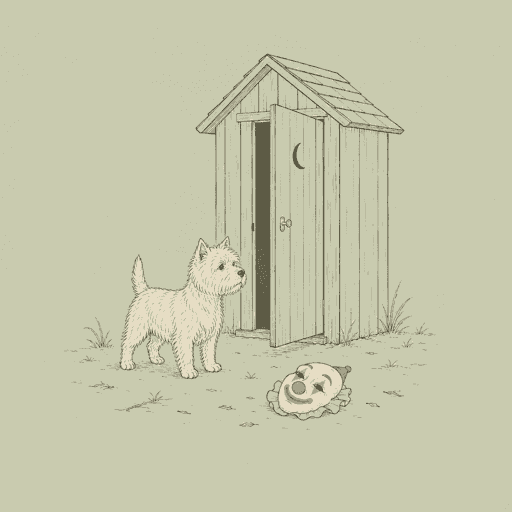
These opening chapters introduce The Illusion of Middle-Class Respectability, where a veneer of normalcy masks a dysfunctional and dangerous environment. The narrator’s clown-themed T-shirt introduces the motif of clowns and clown masks, symbolizing the performance of normalcy that masks hidden secrets. The boy’s description of the shirt mirrors the illusion created by his family:
It had a red nose printed on the front and a huge blue mouth and pinned onto the front pocket was a plastic flower with a bulb at the bottom that filled with water and you asked people to smell it and then you squeezed the bulb, which was usually hidden in your pocket, and the flower squirted water in their face (1).
Just as the clown’s smile is painted on and the flower an illusion designed to catch others off guard, the family presents a welcoming face that conceals something unsettling. Similarly, the house, which Claire finds historically interesting, is immediately framed as a place where outsiders can be ensnared.
The narrative’s fragmented structure, shifting between multiple timelines and points of view, builds suspense by layering partial truths and conflicting perspectives, progressively disclosing details of the mystery. The story unfolds across four distinct periods: The 2005 Prologue, Stuart’s observations of Jessamine in 2016, Jane’s investigation in 2026, and Allen’s historical account beginning in 1958. This non-linear approach forces the reader to piece together the history of Thornwood and its inhabitants, mirroring Jane’s own detective work. By juxtaposing Allen’s controlled, patriarchal narrative with Stuart’s outsider perspective on Jessamine’s self-destruction and Jane’s present-day discoveries, the novel creates dramatic irony—making the reader privy to information that the characters themselves don’t know—and questions the reliability of any single account. Allen presents his family life as an idyllic picture of contentment, while other timelines reveal it to be a site of addiction, neglect, and dangerous secrets.
Jane’s own decaying ancestral home, Rosebery Hall, parallels the dark secrets of Thornwood. Rosebery, a “sprawling, ridiculous country pile” (3) she inherited from parents who died of alcohol-related illnesses, is a physical manifestation of her family’s legacy of addiction and premature death. Jane is trapped by the property, unable to afford its upkeep but emotionally incapable of selling her last link to her family history, underscoring The Inherited Nature of Trauma. The house represents a psychological and financial burden passed down through generations. Her interest in becoming a private detective is a subconscious attempt to impose order on a world that has always felt chaotic. By investigating Rose White’s disappearance—a mystery that leads her back to a site of her own past terror—Jane redirects her focus from her own intractable problems to a solvable external one. In doing so, she seeks to claim the agency she has lacked, rescuing another young woman from a dysfunctional home to metaphorically rescue herself.
The motif of dogs connects the various the timelines, acting as a device to push the plot forward. Jane’s four dogs are the “center of her universe” (5), representing the pure, unconditional love absent from the human relationships in her life. It is her dogs who lead her to Hugo, the small white dog who connects her to Thornwood and sparks the novel’s central investigation. Hugo becomes a narrative link, passed from a neglectful home with Jessamine (as seen in Stuart’s flashbacks, where she forces him to sit in a pub for hours), to the mysterious Rose White, and finally to Jane. While Jane immediately provides Hugo with food, comfort, and medical care, his owner, Mr. Tucker, shows only cursory relief upon his return, signals that Mr. Tucker is an antagonistic figure. The dogs in the novel are vulnerable figures dependent on the care of deeply flawed humans, and the way characters treat them becomes a measure of their moral character and capacity for empathy.
The setting of Thornwood, located in the isolated hamlet of the Vale of Health, emphasizes the novel’s atmosphere of claustrophobia and menace. Jane’s first impression of the area as a “sleepy Dickensian hamlet […] seemingly cut off from the rest of the world” (12) emphasizes its seclusion. This physical separation from the bustling city creates a space where abuse can occur without witnesses, emphasizing the novel’s thematic interest in The Dangers of Isolation. Years later, Jessamine’s description of her childhood home as feeling “like being at the end of the world” (57) reinforces this idea, positioning the house is a psychological prison for its inhabitants. Allen’s narrative reveals that this insularity was cultivated; his ideal family was one shielded from outside influence, allowing his patriarchal control to flourish unchecked. The persistent presence of the old army jeep for over two decades suggests a place frozen in time, where patterns of dysfunction repeat and from which escape is nearly impossible. Thornwood is a self-contained, toxic ecosystem where generational trauma is nurtured by its isolation.

Get in-depth, chapter-by-chapter summaries and analysis from our literary experts.
- Grasp challenging concepts with clear, comprehensive explanations
- Revisit key plot points and ideas without rereading the book
- Share impressive insights in classes and book clubs
Related Titles
By Lisa Jewell








Featured Collections
Class
View Collection
Class
View Collection
Community
View Collection
Daughters & Sons
View Collection
Family
View Collection
Fathers
View Collection
Fear
View Collection
Good & Evil
View Collection
Mothers
View Collection
Safety & Danger
View Collection
Truth & Lies
View Collection