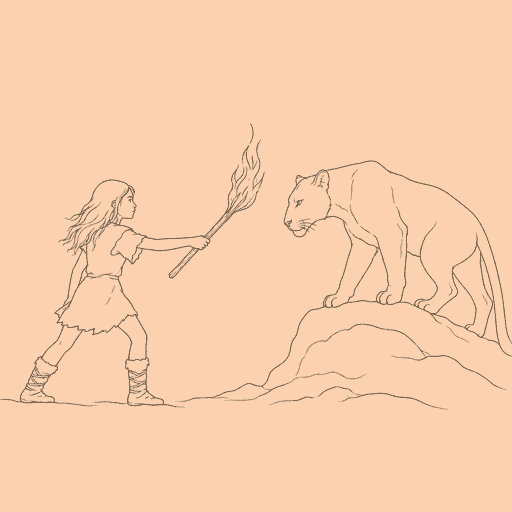
Maroo Of The Winter Caves
Maroo Of The Winter Caves
A modern alternative to SparkNotes and CliffsNotes, SuperSummary offers high-quality Study Guides with detailed chapter summaries and analysis of major themes, characters, and more.
Summaries & Analyses
Quizzes
NEWReading Tools
Background
Historical Context: The Magdalenian Culture
Ann Turnbull grounds Maroo of the Winter Caves in the real-world Magdalenian culture, which flourished in Western Europe from approximately 17,000 to 12,000 years ago. In the author’s note, Turnbull explicitly identifies Maroo’s people with this Upper Paleolithic group, whose name comes from the La Madeleine rock shelter in the Dordogne region of France, one of the key archaeological sites associated with Magdalenian culture. Archaeological evidence indicates that reindeer were a primary resource for many Magdalenian communities and that Magdalenian people, like Maroo’s family, were semi-nomadic hunters who followed seasonal reindeer migrations, relying on them for food, hides for clothing and shelter, and bone and antler for tools like needles and spear points. Maroo’s deerskin trousers and bone needles and her family’s complete dependence on migrating herds reflect this historical reality. The novel is also informed by the Magdalenian people’s sophisticated artistic traditions. In her preface, Turnbull explains that photographs of Stone Age cave art in southern France inspired the novel. Magdalenian sites such as Lascaux in France and Altamira in Spain contain thousands of detailed animal engravings and paintings. These artworks, depicting bison, horses, and mammoths, suggest the importance of symbolic expression in Magdalenian society, although their precise purpose remains debated. By situating her story within this well-documented prehistoric culture, Turnbull grounds the novel’s depiction of family life and survival in the environmental conditions and lifeways of the Late Upper Paleolithic.
Scientific Context: The History of Dog Domestication
Maroo and Otak’s taming of the wild dog Rivo mirrors the scientific understanding of how humans first domesticated wolves during the Upper Paleolithic era. Genetic and archaeological evidence suggests that the dog was the first species to be domesticated, a process that began approximately 15,000 to 30,000 years ago, although some studies propose earlier dates, during a period when hunter-gatherers and gray wolves lived in overlapping territories. One of the proposed explanations for domestication, the cross-species adoption hypothesis, posits that hunter-gatherers actively took in wolf pups, raising them by hand. The novel imagines a scenario consistent with this hypothesis when Maroo and Otak rescue an orphaned pup and raise it despite the adults’ initial skepticism. Their actions illustrate one proposed pathway through which early relationships between humans and wolves may have developed. Over generations, this human-led process favored wolves with tamer, more cooperative traits. The partnership was mutually beneficial: Humans provided a consistent source of food and shelter, while the canids’ superior sense of smell and pack-hunting instincts made them valuable hunting companions and guards. As the children gradually train Rivo, they recognize that these qualities could make him useful during hunts, illustrating the practical advantages that may have encouraged early domestication. Understanding this scientific context helps readers appreciate the historical plausibility of the relationship between Maroo’s family and Rivo.
Literary Context: The Prehistoric-Fiction Subgenre
Maroo of the Winter Caves is an example of prehistoric fiction, a literary subgenre that sets narratives in the Stone Age to explore themes of survival, community, and human ingenuity. Although prehistoric fiction dates back to earlier works such as J. H. Rosny aîné’s Quest for Fire (1911) and William Golding’s The Inheritors (1955), the genre reached a wider popular audience in the late 20th century following the commercial success of Jean M. Auel’s The Clan of the Cave Bear (1980). Auel’s Earth’s Children series is known for its meticulous research and its focus on adult themes, including the complex interactions between Cro-Magnons and Neanderthals and explicit descriptions of prehistoric life. Published in 1984, Turnbull’s novel shares the genre’s emphasis on archaeological research while adapting it for younger readers. It presents the prehistoric world in a manner that’s accessible to younger readers, focusing less on dense anthropological detail and more on the experiences of a family adapting to a challenging environment. The story centers on family relationships, Maroo’s growing independence, and the bond between siblings. Unlike speculative works that sometimes feature anachronisms or fantastical elements, Maroo of the Winter Caves aligns with archaeological reconstructions of Ice Age life. By using archaeological research to inform its fictional setting, Turnbull’s novel demonstrates how prehistoric fiction can reconstruct everyday life in the distant past while remaining accessible to younger readers.

Get in-depth, chapter-by-chapter summaries and analysis from our literary experts.
- Grasp challenging concepts with clear, comprehensive explanations
- Revisit key plot points and ideas without rereading the book
- Share impressive insights in classes and book clubs