Maroo Of The Winter Caves
Maroo Of The Winter Caves
A modern alternative to SparkNotes and CliffsNotes, SuperSummary offers high-quality Study Guides with detailed chapter summaries and analysis of major themes, characters, and more.
Summaries & Analyses
Quizzes
NEWReading Tools
Character Analysis
Content Warning: This section of the guide includes discussion of death and animal death.
Maroo
As the protagonist of the novel, Maroo’s growth into a young leader drives the narrative. Initially, she’s a responsible but typical adolescent, preoccupied with the day-to-day rhythms of her family and harboring simple wishes, such as traveling to the sea. She is dutiful, caring for her younger siblings and respecting the authority of her elders. Her name, which means “Little Ptarmigan,” links her to a clever and resourceful figure in her tribe’s mythology, reflecting qualities that become increasingly important as she accepts greater responsibilities. In the early parts of the narrative, she operates within the secure structure of her family, with her father, Areg, as the provider and Old Mother as the source of wisdom. Her understanding of the world is shaped by the traditions and stories passed down to her, while her responsibilities remain those of an older child within the family.
Areg’s accidental death marks a turning point in Maroo’s development. This event disrupts her family’s stability and requires her to accept responsibilities previously carried by the adults around her. When Old Mother makes the pragmatic but dangerous decision to send the children over the White Mountain for help, she appoints Maroo as leader, a role that she accepts with apprehension. This responsibility requires her to set aside her own fears and focus on her family’s survival. Her leadership is tested not only by the brutal environment but also by her impulsive brother Otak. One of her greatest challenges comes when Otak disappears in a blizzard. Forced to recall Old Mother’s stark command that “one must survive” (87), Maroo continues the journey alone despite her determination to find him. This decision demonstrates her willingness to place her family’s survival above her own wishes, reinforcing the novel’s theme of Coming of Age Through Shared Responsibility.
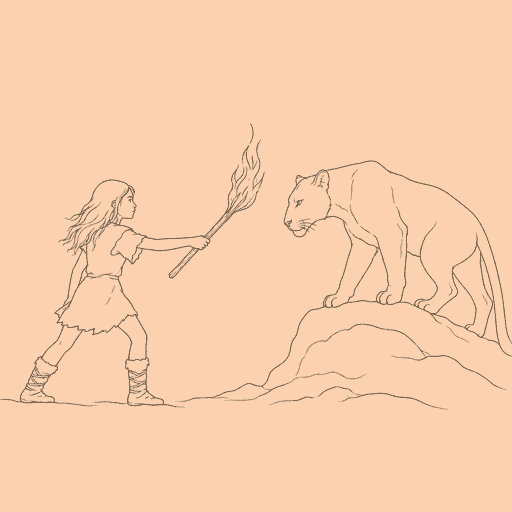
Maroo’s survival and successful return demonstrate her courage and ingenuity. She applies the skills she has learned throughout her life to overcome the challenges she faces. After Vorka is injured, she demonstrates her practical knowledge by splinting his broken arm. On the mountain, her caution and resourcefulness allow her to build a snow house to survive a blizzard. Her confrontation with the cave lion tests both her judgment and courage. Believing the lion to be the mountain spirit, in keeping with the novel’s recurring spirits motif, she uses her knowledge of fire by igniting a torch to drive the animal away. This act, along with her reliance on the sight of Old Mother’s name star, Irimgadu, for comfort, demonstrates her ability to combine practical skill with the traditions and beliefs that have guided her throughout her life. By reaching the camp and guiding the rescue party back to her family, Maroo fulfills the responsibility entrusted to her.
Otak
Otak, Maroo’s younger brother, serves as a foil to his sister’s cautious nature. Impulsive and eager to prove himself as a future hunter, Otak’s experiences force him to recognize the value of caution and cooperation. From the beginning, Otak is characterized by his energy, pride, and determination to earn the respect associated with successful hunters. He’s quick to join a chase, eager to learn the skills of the men, and determined to attain a hunter’s status. This ambition, however, is coupled with a childish recklessness that often creates conflict with Maroo. He chafes under her leadership, viewing her authority as an obstacle to his own desire for action and recognition. His pride is wounded when Maroo, using his spear, kills a hare, contributing to his most dangerous decision. His choice to venture out alone into a blizzard to hunt reflects his frustration and determination to demonstrate his independence and skill.
Otak’s solo ordeal on the White Mountain marks a turning point in his development. After falling and injuring his ankle, he’s forced to confront his own vulnerability. Alone and incapacitated, he must rely on the skills and resources available to him to stay alive. His survival depends on the bond he has forged with Rivo. The dog helps him survive by hunting small game and providing warmth, demonstrating the importance of cooperation between the two companions. This experience confronts Otak with the consequences of his impulsiveness and requires him to rely on cooperation and perseverance. When he finally staggers into the camp, his survival demonstrates the value of patience, resourcefulness, and his partnership with Rivo, reinforcing the novel’s theme of Coming of Age Through Shared Responsibility.
Old Mother (Irimgadu)
Old Mother, whose name is Irimgadu, is the matriarch of the family and serves as its mentor and principal source of knowledge. She preserves the family’s survival skills, traditions, and cultural beliefs, drawing on a lifetime of experience in a harsh environment. She is the one who reads the signs of the coming blizzard, directs the building of shelters, and knows which plants are safe to eat. Her experience and judgment command the family’s respect. One of her most important decisions is to send Maroo and Otak across the White Mountain. This plan, while terrifying to Tikek, is a calculated risk based on her clear understanding of the family’s situation. She understands that remaining where they are will lead to death and that the children’s youth and strength are the family’s only chance. By appointing Maroo as leader, she entrusts her granddaughter with responsibilities that begin her journey toward adulthood, reinforcing the novel’s theme of Coming of Age Through Shared Responsibility.
Beyond her practical skills, Old Mother preserves the family’s spiritual beliefs and cultural traditions. She is the storyteller who connects the children to their heritage with tales of the gods, providing continuity and reassurance during times of uncertainty. Her belief in spirits and rituals provides the family with a framework for understanding and responding to uncertainty, reinforcing the novel’s theme of Tradition as an Emotional Anchor. She teaches the children to appease the mountain spirits with offerings and guides the family through the proper burial rites for Areg, allowing them to process their grief within a shared tradition. Her own name connects her to the evening star, which later becomes a source of comfort for Maroo during her journey across the White Mountain. Through her, the novel suggests that survival depends on preserving both practical knowledge and the traditions that help the family understand the world around them.
Rivo
Rivo, the wild dog adopted by the children, is an important supporting character whose gradual acceptance into the family reflects the trust that develops between humans and animals. His development from a fearful, snarling pup into a loyal and indispensable companion mirrors the growing trust between him and the family. The children’s decision to care for Rivo is an act of foresight and empathy that’s initially met with hesitation by the adults, who worry about feeding another mouth. However, he gradually becomes an essential member of the family. He becomes a working member of the family unit, contributing to their food supply by hunting small game at a time when the human hunters are either dead or injured. His growing role within the family reinforces the novel’s theme of Human Adaptability as the Key to Survival, showing how cooperation and trust create new possibilities for survival.
Rivo’s importance extends beyond companionship because his actions directly influence the family's survival. His loyalty and intelligence are essential to Otak’s survival on the White Mountain. When Otak is injured and alone, Rivo provides warmth and, critically, hunts for him, bringing back enough food to sustain him until he can walk again. His actions demonstrate the bond of trust and interdependence that has formed between him and the children. His safe return with Otak earns him a permanent place within the tribe, as the elders recognize his value and decree that he “will come with [them] to the winter caves” (136). Rivo illustrates how cooperation between humans and animals contributes to the family’s survival.
Areg
Areg, Maroo’s father, provides the family with strength, security, and a sense of stability before the novel’s central crisis. As the primary hunter and leader of his small family group, he provides both physical sustenance and emotional warmth. He’s depicted as a strong and confident man, as well as a playful and loving father who teases his children and tosses Nimai in the air. His skill as a drummer is particularly significant; the music he creates brings the family and the tribe together during celebrations. His hunting skills and leadership give the family a strong sense of safety and normality, even within their challenging world.
His sudden, accidental death during the ibex hunt marks a turning point for the family. His absence leaves the family without its primary hunter at the onset of winter. The family’s subsequent grief shapes many of the decisions they make as they struggle to survive. The decision to place his newly made drum in the grave with him reflects the family’s mourning and their burial traditions, reinforcing the novel’s theme of Tradition as an Emotional Anchor. Areg’s memory continues to influence Maroo, who prays to his spirit for Otak’s safety, and his death compels both Maroo and Otak to accept greater responsibilities within the family.
Tikek
Tikek, Maroo’s mother, is characterized by her devotion to her family and her resilience in the face of hardship. Throughout the journey, she’s focused on the care of her children, especially the new baby born by the sea. Her pregnancy and recent childbirth render her physically vulnerable, making travel more difficult for the family as winter approaches. Initially, she’s emotionally devastated by Areg’s death, and her first instinct is to shield her remaining children from further harm. This protective impulse leads her to vehemently oppose Old Mother’s plan to send Maroo and Otak over the White Mountain, reflecting her fear of losing more of her family members. Her fear and grief highlight the emotional stakes of the family’s plight. Despite her vulnerability, Tikek demonstrates resilience. She carries on with her duties, cares for her infant in the harshest conditions, and ultimately allows Old Mother’s plan to proceed after the older woman insists that it offers the family its best chance of survival. Her steadfast care for her children also reflects the enduring strength required to sustain the family through loss and hardship.
Vorka
Vorka, Areg’s younger brother, is a supporting character who illustrates the physical and emotional consequences of loss. He begins the story in his older brother’s shadow, quieter and less assertive than the confident Areg. The disastrous ibex hunt that kills Areg also leaves Vorka with a broken arm, leaving him unable to fulfil his role as a hunter. Unable to hunt, he’s stripped of his primary role within the family. His subsequent grief is so deep that it manifests as a “sickness of the spirit” (65), and he initially refuses to eat or participate in the family's daily life, consumed by despair and guilt. His journey is one of slow recovery as he gradually resumes his responsibilities to the surviving members of the family. Although he can’t lead the hunt, he provides what support he can. His willingness to help remains evident when he offers to accompany Otak across the White Mountain despite the weakness in his injured arm. Vorka’s struggle highlights the lasting effects of grief and the determination required to continue supporting the family after tragedy.

Unlock analysis of every major character
Get a detailed breakdown of each character’s role, motivations, and development.
- Explore in-depth profiles for every important character
- Trace character arcs, turning points, and relationships
- Connect characters to key themes and plot points