Maroo Of The Winter Caves
Maroo Of The Winter Caves
A modern alternative to SparkNotes and CliffsNotes, SuperSummary offers high-quality Study Guides with detailed chapter summaries and analysis of major themes, characters, and more.
Summaries & Analyses
Quizzes
NEWReading Tools
Chapters 1-4Chapter Summaries & Analyses
Content Warning: This section of the guide includes discussion of animal death.
Chapter 1 Summary: “The Thaw”
Maroo, a young girl of the Madeleine people at the end of the last Ice Age, wakes up hungry in her family’s crowded winter cave. The hunters have been gone since the previous day, and food is scarce. She and her little sister, Nimai, chew on tasteless dried roots to quiet their hunger. They join their grandmother Old Mother, who is skillfully reviving the morning fire in the outer cave. Old Mother sends the girls outside to gather herbs for a warm drink. As they walk through the melting spring landscape, they search for edible berries, roots, and herbs, and Maroo dreams of her family traveling to the sea—a place she has never seen—for the summer. After gathering edible plants, the girls see their reflections in the partially thawed lake, which they call their “spirits.” Their younger brother, Otak, arrives and playfully throws a stone, shattering the images. Just then, Nimai spots figures in the distance, and the children realize that the hunters are returning. Maroo and Otak immediately race to be the first to greet them.
Chapter 2 Summary: “The Spring Killing”
The returning hunters, led by Maroo’s father, Areg, and another man, Tevo, have successfully killed a large bison. As the women butcher the animal, Maroo and another girl scrape the hide clean before the tribe gathers for a day-long feast. During the festivities, Areg plays a complex rhythm on a decorated drum. The next morning, Old Mother announces that the time has come to leave the cave for the summer hunting season. Maroo asks her pregnant mother, Tikek, if they can journey to the sea, but Tikek says that the new baby’s needs will determine their route. As the tribe prepares to leave, the men draw maps in the fire’s ash, discussing a long, safe trail around the White Mountain and a shorter, more dangerous path across it. The tribe fears the mountain trail because of cave lions, a dangerous glacier, and unfriendly spirits. Otak wishes that they could take the perilous route, but the idea frightens Maroo.
Chapter 3 Summary: “On the Great Plain”
As the tribe divides into smaller groups for the summer, Maroo’s family travels separately. The small group consists of Areg; his brother, Vorka; Old Mother; Tikek; and the three children, Maroo, Otak, and Nimai. After traveling past the White Mountain, Areg leads them to a wooded gorge to make a new camp. While the men begin constructing a hut, Old Mother takes Tikek and the children to forage. They find edible roots and a rotten log full of fat grubs. Later, Maroo and Otak spot several ibex and chase them up a steep hill, leaving Nimai behind. At the windy, cold summit, they stop after the chase and hear a faint whimpering sound coming from nearby rocks. Curious and cautious, they move toward the sound, with Otak holding his small spear ready.
Chapter 4 Summary: “Wild Dog”
Maroo and Otak discover a dead wild dog lying next to its whimpering pup, which has a badly injured leg. Remembering a man from another tribe who kept a tame dog, Maroo suggests taking the pup back to camp. While Otak uses his leather mittens to hold the snarling, frightened pup, Maroo cleans and bandages its wound. They take the pup back to their family, where Old Mother initially objects, while Tikek becomes supportive after seeing that the pup’s leg is likely to heal. Old Mother leaves the final decision to Areg. Fascinated by the pup’s ferocity, Areg agrees that it can stay with the family. The family finishes building their new home—a low, domed hut of willow branches covered in hides. Maroo feeds the pup and tethers it to a tree. That night, Old Mother tells a story about the goddess Ptarmigan, Maroo’s namesake. Before going to sleep, the children find that the pup’s legs are twitching, and Old Mother explains that he’s “chasing the Dream Hare” (27).
Chapters 1-4 Analysis
The narrative opens with Maroo waking hungry in the dark cave, a moment that immediately grounds the story in the physical realities of scarcity and survival. Her imagination of “tough, hot meat, savoring the charred, smoke-tasting outer part and then the salty blood within” contrasts sharply with the “tough and tasteless” dried root she eats to quell her hunger (1). This sensory opposition establishes the precariousness of life in the last Ice Age. The subsequent scene, where Old Mother coaxes a flame from embers, associates fire with survival and communal life. The image of a “thread of scarlet quivered” emphasizes the care required to preserve the fire that sustains the family (2). Old Mother’s patient skill represents the constant vigilance and transmitted knowledge required to sustain the group. Fire illustrates Human Adaptability as the Key to Survival by providing warmth, enabling cooking and toolmaking, and bringing the family together. It reflects the practical knowledge passed from one generation to the next, allowing the family to endure a harsh environment.
The day-long feast highlights the cultural practices that strengthen the tribe’s shared identity. The feast connects the successful hunt with communal ritual and social organization. The order in which the hunters receive food reveals the tribe’s hierarchy, while Maroo’s work scraping the hide gives her an active role in supporting the community and marks an early step toward Coming of Age Through Shared Responsibility. Areg’s drumming also demonstrates how music brings the community together during an important occasion. As he taps a “complex rhythm” on the decorated instrument, the community responds by clapping and singing, turning the feast into a collective celebration. Later, at the family’s new camp, Old Mother’s storytelling, particularly her tale of Ptarmigan, Maroo’s namesake, extends this emphasis on shared culture. These rituals offer continuity and reassurance during a life shaped by uncertainty, illustrating Tradition as an Emotional Anchor. The stories and music preserve the tribe’s shared beliefs, traditions, and values, creating a sense of order and meaning amid unpredictable natural cycles.
The concept of spirits is introduced as an important part of the tribe’s worldview, shaping how they understand the world around them. Maroo and Nimai see their reflections in the partially thawed lake, and Nimai declares, “See my spirit!” (5). Here, the children understand a spirit as a reflection of themselves. Turnbull later expands this familiar idea through the “unfriendly spirits” of the White Mountain, which the adults fear more than the mountain’s visible dangers. Maroo senses that these spirits are “something much more to be feared than wild beasts” (13), though she can’t define what they are. The changing use of the word “spirit” shows how the tribe applies the concept to personal identity, unseen beings, and dangerous places. Their belief system shapes the way they interpret the landscape and influences the routes they choose, reinforcing the traditions passed down through earlier generations.
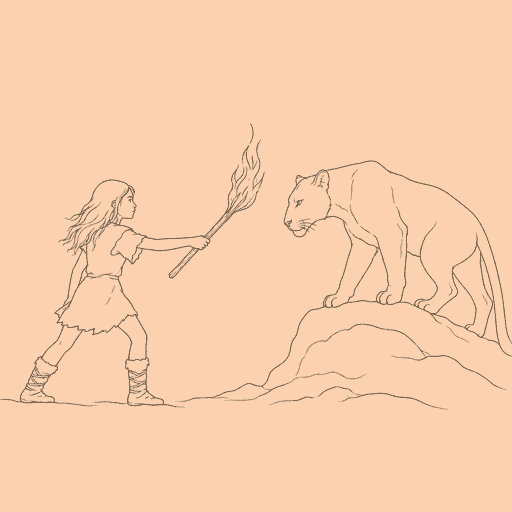
The differing reactions of Maroo and Otak to the White Mountain trail establish an important contrast between the siblings and foreshadow the challenges they will later face. The mountain represents an unfamiliar and dangerous place whose physical hazards are intensified by the tribe’s spiritual beliefs. Otak expresses a boyish desire for adventure, whispering, “I wish we could take the White Mountain trail. I want to see a cave lion” (13). His focus on the cave lion reflects his curiosity and excitement about confronting an animal he has previously known only through descriptions and bones. Maroo is frightened by the stories of hostile spirits, showing how the adults’ warnings have shaped her understanding of the mountain. She fears its cave lions, glacier, and spirits, although her fear remains mixed with curiosity about why people avoid the route and what might happen if they crossed it. This contrast between the siblings introduces the different ways they respond to uncertainty and foreshadows Maroo’s growing sense of responsibility. Her combination of caution and curiosity lays the foundation for the careful judgment she will later need as a leader.
The children’s discovery of the orphaned pup develops the novel’s exploration of compassion, adaptability, and cooperation. Their decision to save the injured animal, despite the adults’ pragmatic skepticism, is an act of empathy that reflects their willingness to care for a vulnerable creature Vorka’s concern about the elders’ response highlights the tension between the children’s initiative and established practice. The family’s discussion also reveals the practical considerations involved in keeping the pup, including the food it will consume and the difficulty of traveling with an injured animal. The adults’ decision-making process reflects their different perspectives: Tikek supports the children after examining the pup’s injury, Old Mother reluctantly allows Areg to make the final decision, and Areg responds with fascination at the pup’s fierceness. His agreement that it can remain with them validates the children’s initiative and demonstrates the family’s openness to trying an unfamiliar arrangement. The pup’s acceptance into the family establishes a relationship that later becomes an important source of support and survival, reinforcing the novel’s interest in adaptation through cooperation.

Get in-depth, chapter-by-chapter summaries and analysis from our literary experts.
- Grasp challenging concepts with clear, comprehensive explanations
- Revisit key plot points and ideas without rereading the book
- Share impressive insights in classes and book clubs