Python's Kiss
A modern alternative to SparkNotes and CliffsNotes, SuperSummary offers high-quality Study Guides with detailed chapter summaries and analysis of major themes, characters, and more.
Summaries & Analyses
Quizzes
NEWReading Tools
Book Club Questions
Content Warning: This section of the guide includes discussion of animal cruelty, graphic violence, child death, and emotional abuse.
General Impressions
Gather initial thoughts and broad opinions about the book.
1. Many of the stories in Python’s Kiss blend gritty realism with supernatural or mythic elements. How did this mix of genres affect your reading experience? If you’ve read other works by Louise Erdrich, such as The Round House or The Sentence, how does this collection compare to her novels in its style and themes?
2. Which story or character resonated with you the most after you finished the book? What was it about that particular narrative or person that has stayed with you?
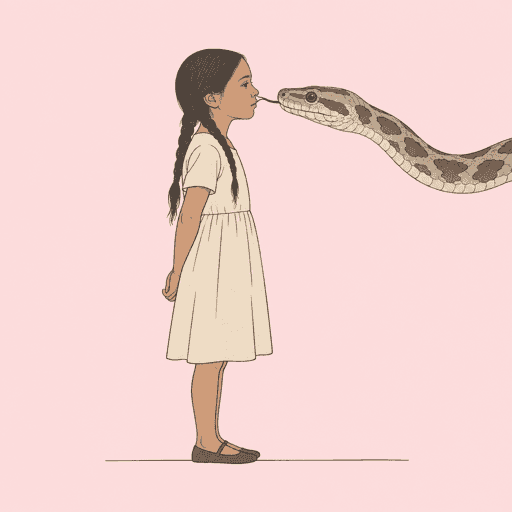
3. What is the significance of the collection’s title, Python’s Kiss? How does the central image from that first story, the snake’s touch that marks the narrator with “wisdom or maybe sorrow” (14), set the stage for the themes you saw in the rest of the collection?
Personal Reflection and Connection
Encourage readers to connect the book’s themes and characters with their personal experiences.
1. In “The Stone,” the protagonist forms a lifelong bond with a piece of basalt that becomes a container for her memories and feelings. Think about a physical object in your own life that holds a similar weight. What makes certain objects so powerful as anchors for our personal histories?
2. The narrator in “Big Cat” copes with his wife’s snoring by turning it into an elaborate imaginary drama about lions on the savanna. Have you ever used your imagination to reframe a frustrating or difficult situation? What is the power in turning reality into a story?
3. Dora, in “Wedding Dresses,” carefully edits the stories of her failed marriages before sharing them with her young niece. Think about a time you’ve had to simplify a complex personal story for a specific audience. What guides your decisions about what to share and what to leave out?
4. What do you make of Mr. Ponath’s decision in “Amelia” to adopt the persona of Colonel Sanders? Have you ever tried to emulate others to project a certain image of yourself? In what ways can crafting a public identity be a tool for connection, survival, or even defiance in a community?
5. Think about the narrator in “The Feral Troubadour,” who feels a kinship with the wild cat he traps, or the narrator in “Python’s Kiss,” who finds his first moment of empathy with the dog Nero. What have your own relationships with animals revealed about the human experience, your capacity for care, or your feelings of alienation?
6. In the face of the terrifying blizzard in “The Hollow Children,” 11-year-old Agnid leads the other children in song to keep their spirits up. How do you try to engage with the idea of living in frightening or uncertain times? Do you try to engage with it directly, or do you try to distract from it?
Societal and Cultural Context
Examine the book’s relevance to societal issues, historical events, or cultural themes.
1. The story “Assassin” connects a harmless teenage game to the very real anxiety surrounding school shootings. What does this story suggest about how younger generations process and cope with pervasive societal fears? Where else do you see this kind of simulation or rehearsal used to manage difficult realities?
2. How do the speculative stories “Domain” and “Asphodel” serve as a critique of our current digital age? In what ways do you see their depiction of a corporate-run afterlife, where memory is a commodity and personhood is contractual, reflecting trends in social media, data privacy, and the tech industry today?
3. What do the specific historical references, like the history of the Buffalo Soldiers in “Amelia” or the tragic reality of prairie blizzards in “The Hollow Children,” add to the collection? How do these anchors in real-world history affect the way you read the more fantastical or surreal elements in other stories?
Literary Analysis
Dive into the book’s structure, characters, themes, and symbolism.
1. Snakes appear in multiple stories, sometimes as protectors and other times as threats. How does Erdrich use this recurring motif to explore the theme of Human Intimacy With the Nonhuman? What does the snake’s ambiguous nature suggest about the moral landscape of the collection?
2. What effect did the shift from realism in stories like “December 26” to speculative fiction in “Domain” and “Asphodel” have on you as a reader? How do these futuristic tales expand on or challenge the themes of memory and identity found in the more grounded stories?
3. Revenge is a powerful motivator in stories like “Borsalino,” where a ghost helps punish an abusive husband, and “Amelia,” which ends with an elaborate, posthumous plot. How does the collection seem to define justice? What is the relationship between the personal, often supernatural, forms of vengeance seen here and more conventional ideas of law and order?
4. How does this collection depict the messy realities of long-term partnership in stories like “Wedding Dresses” and “Big Cat”? What do these narratives suggest about what it takes to sustain a relationship versus what causes one to break apart?
5. The digital afterlives in “Domain” and “Asphodel” offer a chilling vision of commodified consciousness. How does this depiction compare to other explorations of artificial or uploaded consciousness you may have encountered in works like Kazuo Ishiguro’s Klara and the Sun or the television series Black Mirror? What makes Erdrich’s vision unique?
6. Throughout the collection, physical objects like the Borsalino hat, the ruined wedding dresses, and the basalt stone are central to the characters’ identities and memories. What role do these tangible items play in a world that, in stories like “Asphodel,” is becoming increasingly abstract and digital?
Creative Engagement
Encourage imaginative and creative connections to the book.
1. If you were asked to write a new story to be included in Python’s Kiss, what theme from the book would you focus on? Would you explore another form of Human Intimacy With the Nonhuman, a critique of modern technology, or a story about tactile memory?
2. Imagine you work for the corporation that runs the afterlife in “Asphodel.” How would you market this service to potential clients? Which features would you highlight, and how would you gloss over the ethical concerns, like the erasure of “projections” like Caroline?
3. Suppose you were adapting “Amelia” for the screen. How would you handle the final reveal that Mr. Ponath and his sister were the same person? Would you use flashbacks, visual clues, or keep it as a surprise twist, just as it is in the story?

Get in-depth, chapter-by-chapter summaries and analysis from our literary experts.
- Grasp challenging concepts with clear, comprehensive explanations
- Revisit key plot points and ideas without rereading the book
- Share impressive insights in classes and book clubs
Related Titles
By Louise Erdrich

















Featured Collections
Books on Justice & Injustice
View Collection
Challenging Authority
View Collection
Childhood & Youth
View Collection
Coming-of-Age Journeys
View Collection
Earth Day
View Collection
Fear
View Collection
Indigenous People's Literature
View Collection
Memory
View Collection
Mortality & Death
View Collection
National Book Awards Winners & Finalists
View Collection
Nature Versus Nurture
View Collection
Power
View Collection
Revenge
View Collection
Safety & Danger
View Collection